
Using Court Cards to Build a Personal Skill Roadmap
Court cards can act like a curriculum for personal development when read as stages and archetypal supports. This article shows how to use four court cards—Page of Pentacles, Knight of Wands, Queen of Swords and King of Pentacles—to map a realistic pathway from first learning to mature stewardship. It explains Rider‑Waite‑Smith symbolism, provides a step‑by‑step 4‑card roadmap spread, interprets uprights and reversals in coaching terms, gives exercises and journaling prompts, and lists common mistakes to avoid so your readings translate directly into goals, habits and measures of progress.
Cards explored in this article
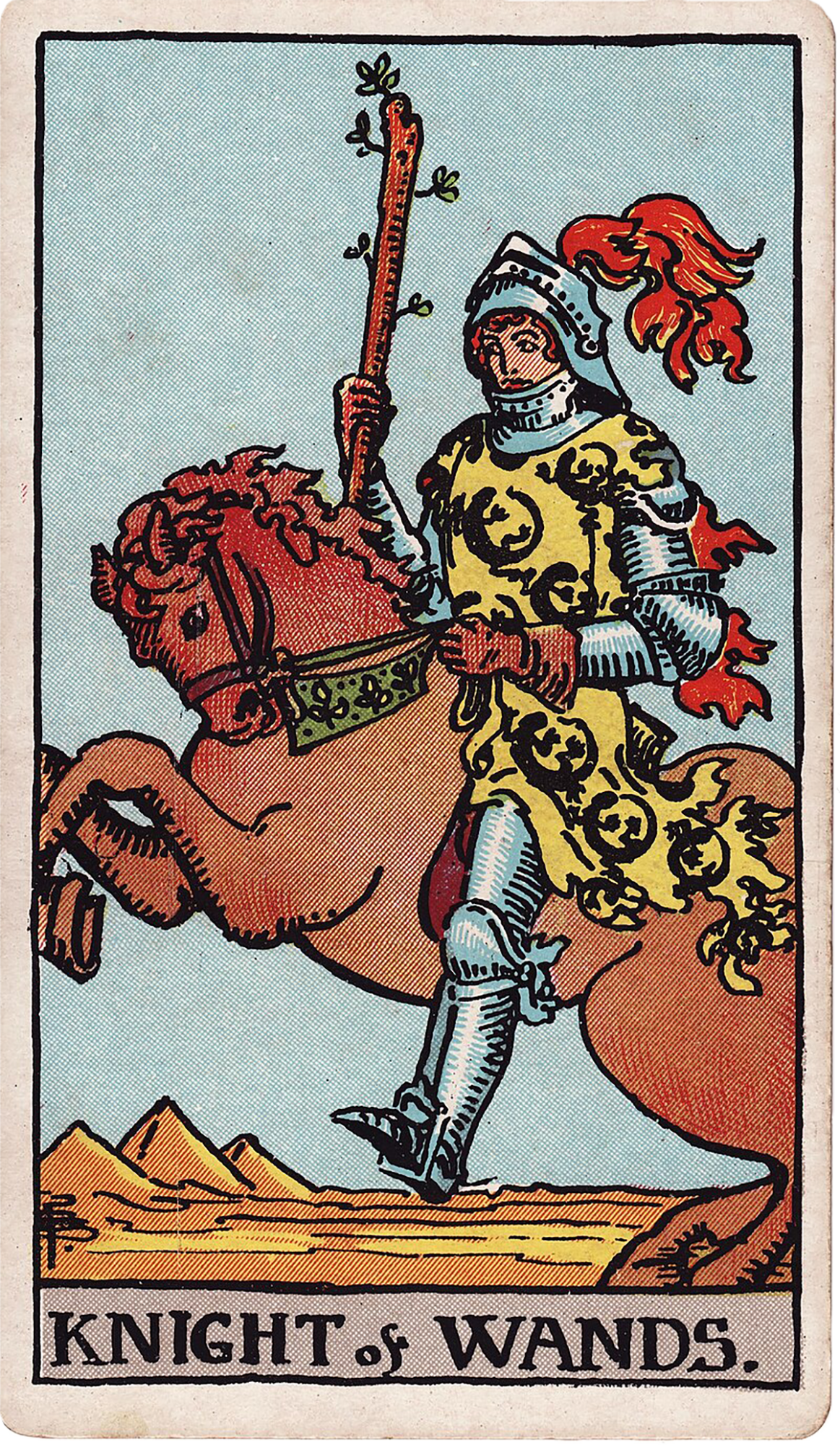 Knight of Wands
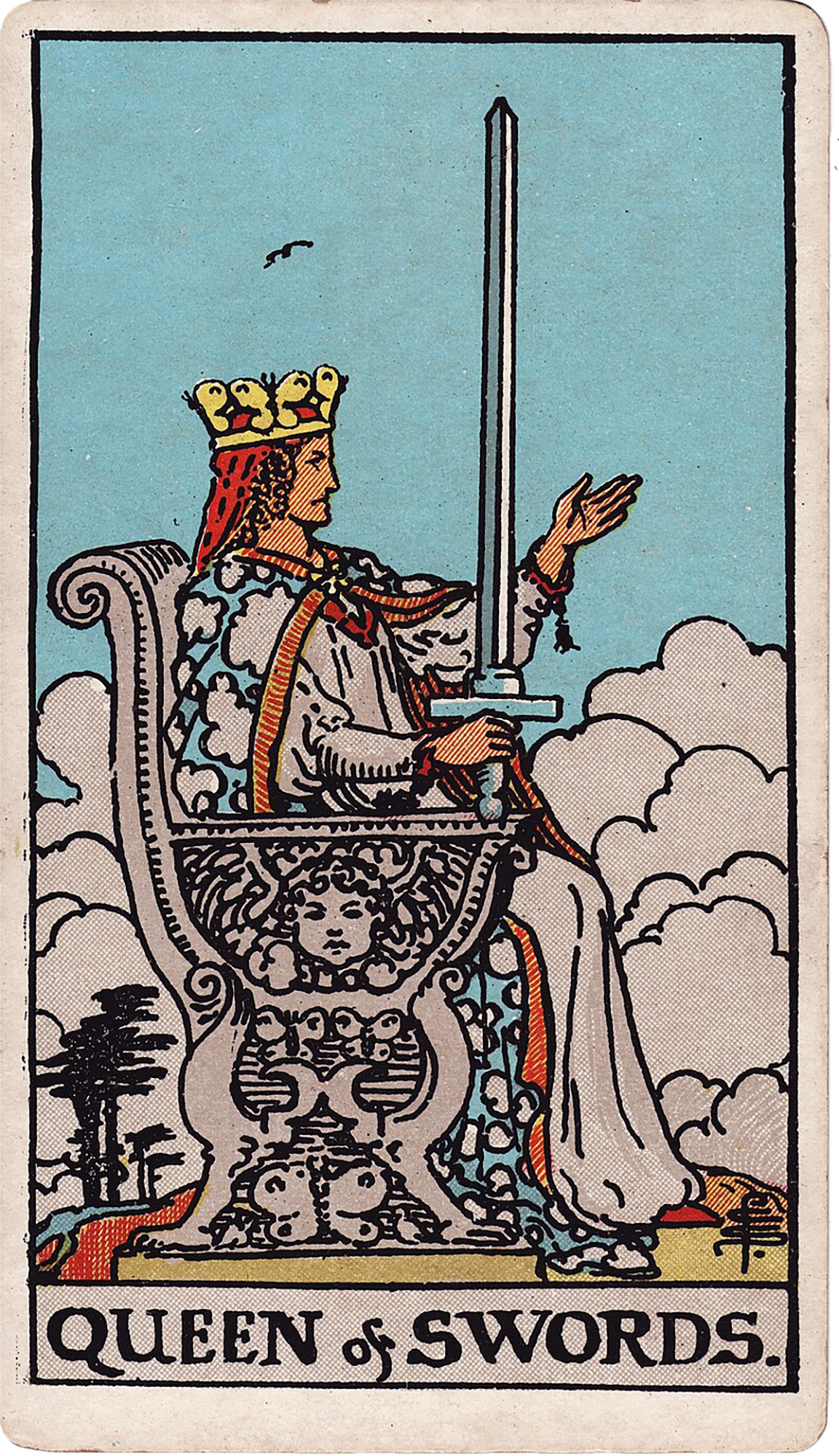 Queen of Swords
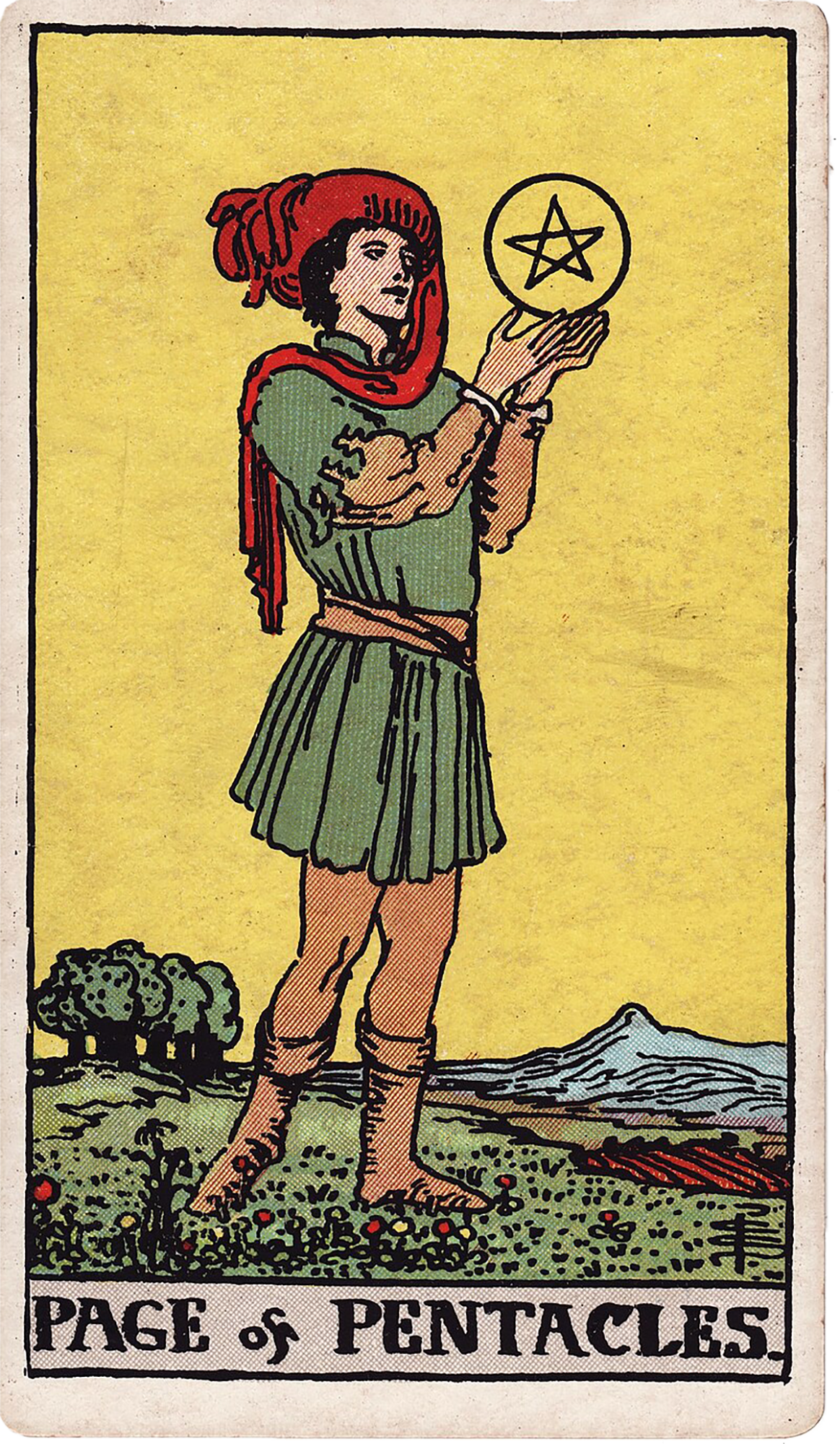 Page of Pentacles
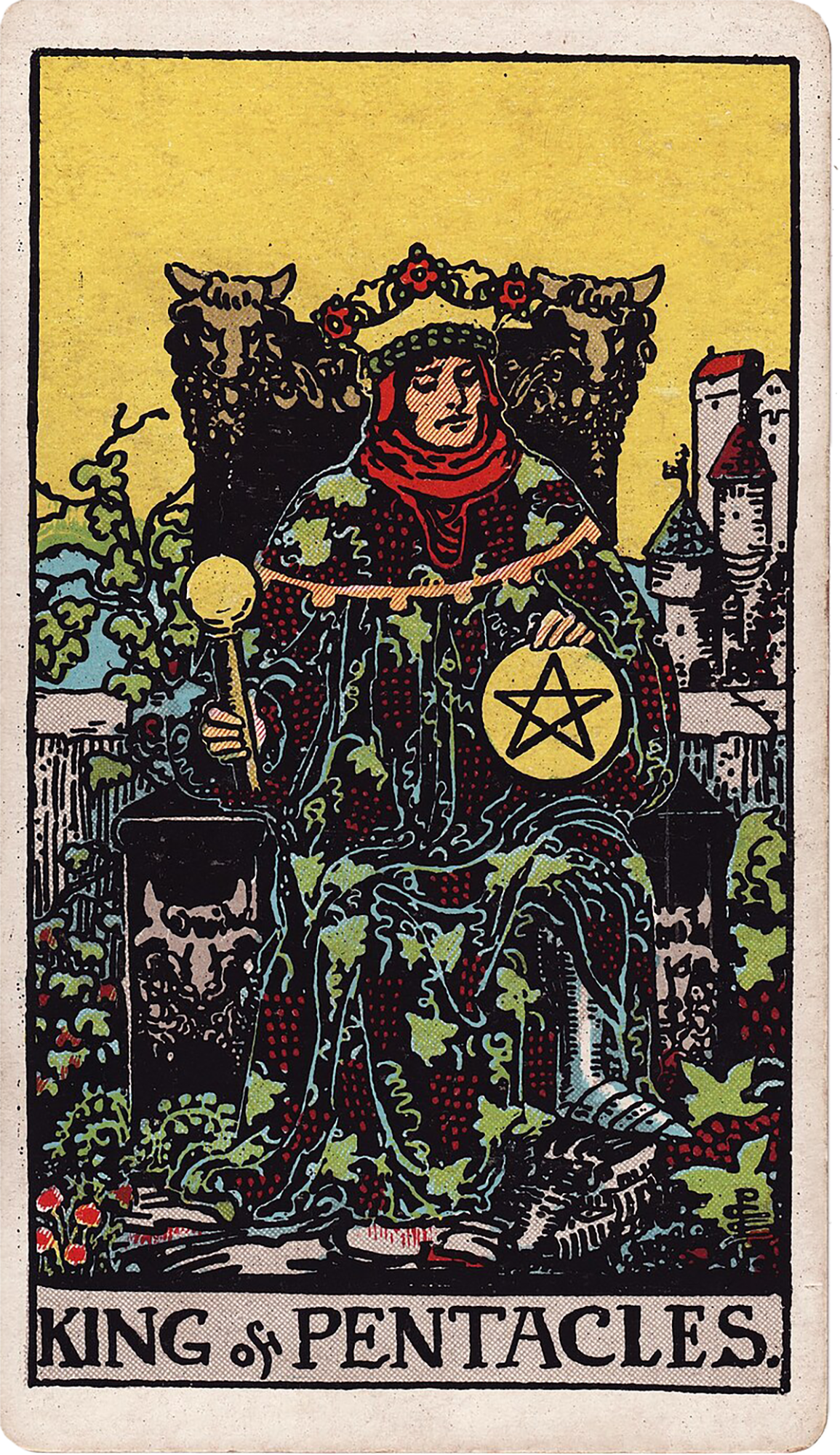 King of Pentacles
Court cards as developmental guides
Court cards belong to the Minor Arcana family and often point to personalities, modes of action, or stages of development rather than single events. When you view court cards as roles in a learning process, they become a compact coaching system: Pages introduce beginnings; Knights show applied energy or experimentation; Queens represent cultivated skills used in context; Kings show stewardship and the capacity to sustain and transmit what has been built. Because you supplied four specific court cards, this article uses those exact images as a living example: Page of Pentacles (the learner), Knight of Wands (the tester/agent of momentum), Queen of Swords (the clarifier/communicator) and King of Pentacles (the steward/establisher).
Reading Rider‑Waite‑Smith imagery as skill signals
The Rider‑Waite‑Smith (RWS) deck uses visual metaphors that help translate inner processes into action steps. Anchor your observations in the imagery: - Page of Pentacles: The Page studies a pentacle closely, often shown standing on fertile ground. This suggests beginner attention to practical details, curiosity about craft, and experiments that are material and skill‑based. Use this card to identify what to study, what entry‑level practice looks like, and which resources or mentors to pursue. - Knight of Wands: The Knight rides a rearing horse across a desert landscape, wearing symbols of fire such as salamanders; the pose communicates fast movement, daring and a willingness to take risk. As a roadmap stage, this card signals ambitious implementation and visible action—but it also warns about haste or pursuit of novelty without consolidation. - Queen of Swords: The Queen sits with an upright sword, a clarity of mind and firm boundaries. She represents discernment, precise communication and honest appraisal. In a skill roadmap she indicates the need to refine strategy, clarify priorities, write clear agreements or explain your work to others with concise language. - King of Pentacles: The King is seated amidst signs of abundance—grape vines, architectural solidity, symbols of wealth and authority. He represents mature stewardship, systems and long‑term sustainability. When this card appears for a roadmap, translate it into structures: financial planning, operational systems, mentorship roles, and durability measures. Grounding your reading in these visual cues helps you translate symbolic insight into concrete next steps.
Why court cards make good planning tools
Court cards naturally map onto development because they combine identity, behavior and context. Unlike a single pip card that shows a condition, court cards propose an actor and a set of competencies. That makes them ideal for designing a roadmap where each stage requires a different mindset and different practices. Practical advantages: - Role clarity: You can name the mode you’re in (learner, doer, clarifier, steward). - Prioritization: Each card suggests a focused type of practice—study, experiment, critique, systems work—so you avoid scattering your effort. - Evaluation: You can decide what evidence proves you’ve moved from one card’s stage to the next. Because the four supplied cards come from two suits—Pentacles and Wands and Swords—they also remind you to include multiple domains in a plan: material competence, energetic action and mental clarity. The King of Pentacles and Page of Pentacles together emphasize the material arc from apprentice to master steward; the Knight of Wands and Queen of Swords highlight the need to balance momentum with clear communication and boundaries.
A practical 4‑card roadmap spread
This is a simple, repeatable spread that maps directly onto a personal skill roadmap. Use the exact four cards supplied as a template or pull from your deck and interpret through the same schema. Positions: 1) Foundation — Where you are learning now (Page energy) 2) Momentum — What action will move you forward (Knight energy) 3) Clarification — What needs sharpening or clarifying (Queen energy) 4) Stewardship — How to build sustainability and measure success (King energy) How to work the spread: - Shuffle with intention: Think of a single skill you want to develop (e.g., public speaking, coding, business bookkeeping). Keep the skill specific. - Draw four cards or place the four supplied court cards into the positions above if you want a template reading practice. - For each card, ask: "What does this role demand from me now? What small concrete step matches this energy?" Example (using the supplied cards as a direct reading): 1) Page of Pentacles in Foundation: You’re at a stage of careful study—identify one course, one mentor and a daily 30‑minute practice slot. The Page asks for doable, material learning: install the software, buy the textbook, schedule the practice. 2) Knight of Wands in Momentum: The next move is bold action—launch a small project, enter a short challenge, or present work publicly. But because this Knight can rush, set constraints: make it a two‑week sprint with a single measurable metric. 3) Queen of Swords in Clarification: Use evaluation tools now—clear feedback forms, contracts, or concise self‑reviews. The Queen asks you to remove vagueness: rewrite your offering blurbs, practice a 90‑second pitch, and set boundary rules for time and scope. 4) King of Pentacles in Stewardship: Translate learnings into systems: pricing, a bookkeeping sheet, a schedule that ensures rest and maintenance. The King asks you to test whether what you’ve built can run for six months without burning out.
Interpreting uprights and reversals as stages and obstacles
When reading court cards as a roadmap, upright and reversed positions give coaching nuance rather than a single fate. Use the supplied card text as a rubric. Page of Pentacles: - Upright: Beginner energy; attention to craft; realistic planning. Actionable interpretation: choose a learning scaffold and commit to a routine. Metric: number of practice hours, small project completion. - Reversed: Procrastination, poor study habits or shallow motivation. Interpretation: reduce scope, create accountability, eliminate distractions. Concrete move: schedule 15‑minute focused sessions with a timer and report progress to an accountability partner. Knight of Wands: - Upright: Decisive movement, courage, initiative. Interpretation: run a sprint, prototype publicly. Guardrails: define the timeframe and the outcome measure to avoid scattering. - Reversed: Recklessness, unfinished ventures, chasing novelty. Interpretation: simplify the number of projects, bind yourself to finish one thing before starting another, track completion rate. Queen of Swords: - Upright: Clear communication, boundaries, strategic critique. Interpretation: write crisp descriptions, practice difficult conversations, set terms of engagement. - Reversed: Bitterness, excessive criticism or emotional avoidance. Interpretation: calibrate empathy into feedback, own what you’re protecting, practice constructive language instead of dismissal. King of Pentacles: - Upright: Stewardship, sustainable systems, resource competence. Interpretation: create budgets, calendars, mentorship structures; measure long‑term viability. - Reversed: Greed, rigidity, or stagnation. Interpretation: revisit goals for meaning beyond security, build flexibility, and create a simple innovation slot in your calendar. Logic for transitions: If the Page is reversed while the Knight is upright, your problem is implementation without reliable base—so add micro‑learning. If the Knight is reversed but the Queen is upright, you have the mental clarity to plan, but energy is misapplied—redistribute effort into focused routines. Read combinations narratively: cards describe both sequence and feedback loops.
Example readings and practical translation
Three short example scenarios that show the translation of image to action. Each example names simple, measurable steps. Example A: Building a freelance web design practice (four supplied cards used directly) - Page of Pentacles (Foundation, upright): You’re learning HTML/CSS. Action: enroll in a targeted course and complete the first module in two weeks; commit 4 practice hours per week. - Knight of Wands (Momentum, upright): Launch a one‑page portfolio in a 10‑day challenge. Action: make a list of three portfolio pieces and publish the first live site within 10 days. - Queen of Swords (Clarification, upright): Draft a clear service offering and a one‑page contract. Action: create a template contract and a 90‑second pitch for clients. - King of Pentacles (Stewardship, upright): Set prices, bookkeeping and a client intake process. Action: open a business account, set fees for three packages, and create a monthly cashflow sheet. Example B: Public speaking skill with a stuck energy - Page of Pentacles (Foundation, reversed): You’re avoiding practice and treating it like an abstract goal. Fix: schedule 10 two‑minute micro‑speeches during the week. - Knight of Wands (Momentum, upright): You get excited and sign up for events impulsively. Fix: commit only to one public slot this month and treat it as a rehearsal night. - Queen of Swords (Clarification, upright): Use targeted feedback forms and script editing. Fix: write a 3‑point structural outline for the talk and test phrases aloud. - King of Pentacles (Stewardship, reversed): Fear of being commercially evaluated stops you. Fix: focus on habit metrics, not income, for three months; create a maintenance ritual after events. Example C: Learning a craft where clarity matters - Page of Pentacles upright: Focus on fundamentals—practice drills daily. - Knight of Wands reversed: You jump to flashy techniques. Fix: cycle back to fundamentals for two weeks. - Queen of Swords upright: Invite a mentor to give clear critique; rewrite practice notes. - King of Pentacles upright: Build a sustainable practice schedule tied to outcomes (competitions, sales, exhibitions).
Common mistakes and how to avoid them
1) Treating reversals as simply the opposite. Reversals more commonly point to where the process is stuck. Instead ask: "What needs simplifying, acknowledged, practiced, released, or communicated?" For example, Knight of Wands reversed rarely means 'don’t act'—it often means act with better constraints. 2) Ignoring suit context. Court cards behave differently in each suit family. The Page and King of Pentacles stress material skill and systems; the Knight of Wands emphasizes energy and initiative; the Queen of Swords demands intellectual clarity. Don’t read a Knight of Wands as purely logistical—its suit matters. 3) Reading cards in isolation. Court cards tell a story about roles: a Page who never becomes a Knight indicates stuck apprenticeship. Always read the sequence and ask what evidence would show movement. 4) Overly vague action steps. When a Queen of Swords tells you to "clarify," translate that into a concrete deliverable: a one‑page synthesis, a 90‑second pitch, a contract template. 5) Skipping the follow‑through. Court cards point to practices that build over time. Convert readings into measurable habits and check them regularly against the King stage: can the process run for three months and still produce results? 6) Mistaking persona for fixed identity. Court cards describe modes to adopt, not forever identities. You can act like a Page in one area and a King in another. Use the cards to decide which mode you need now.
Exercises and monthly practice plan
Exercise 1 — Four‑week roadmap reset Week 1 (Page): Inventory learning needs and set three measurable micro‑goals (e.g., learn three features, read one chapter, complete one tutorial). Week 2 (Knight): Run a focused 7‑day prototype or sprint; measure time spent and output. Week 3 (Queen): Gather three pieces of feedback and edit your materials; refine a script/contract/description. Week 4 (King): Build two systems: a basic budget and a maintenance schedule; test if the system holds for 30 days. Exercise 2 — Micro‑reading and journaling Pull a single court card each morning for a week and write one concrete action: what one thing can you do today that matches this role? If you pull Knight of Wands, write the one high‑leverage action and a guardrail to prevent recklessness. Exercise 3 — Accountability mapping For each card, name a person or resource that can help. Page: teacher or tutorial; Knight: project buddy or coach to keep you honest; Queen: a trusted critic or editor; King: an accountant or operations mentor. These exercises turn symbolic insight into repeated, measurable behavior which is the point of a roadmap.
Translating a reading into a SMART plan
SMART goals (Specific, Measurable, Achievable, Relevant, Time‑bound) are easy to derive from court card readings. Example formula using the supplied cards: - Specific: From Page of Pentacles—identify the exact skill to learn (e.g., responsive layout for three breakpoints). - Measurable: From Knight of Wands—define the sprint output (e.g., publish one responsive page in 10 days). - Achievable: From Queen of Swords—apply critique and adjust scope until realistic (e.g., pick a single template to adapt). - Relevant: From King of Pentacles—ensure the outcome supports income or longevity (e.g., price a template to test viability). - Time‑bound: Use Knight and Page to set short sprints and study periods, and King to schedule quarterly review. After you convert a reading into SMART targets, record them in a tracker and review weekly with the Queen’s clarity—the weekly check should be concise, honest, and focused on metrics, not mood.
Final notes on practice and ethics
Court cards can feel personal because they name modes of being. Use them as tools for self‑direction rather than labels that limit you. When you see the Queen of Swords, practice compassion in application; when you see the King of Pentacles, remember stewardship includes care for people and resources, not just accumulation. Always read ethically: do not substitute symbolic advice for professional counseling where needed. Use these readings to build skills, not to avoid practical planning or professional help.
Conclusion and next steps
Treat the Page of Pentacles, Knight of Wands, Queen of Swords and King of Pentacles as a four‑part curriculum you can apply to any concrete skill. Start small: do a 4‑card roadmap reading for a single three‑month objective, translate each card into one measurable action, and commit to weekly Queen‑style check‑ins. Track the results and repeat the spread at the end of the cycle. Over time the cards will help you notice whether you’re stuck in study, racing without finish, over‑rationalizing, or building systems that are too rigid—each insight points to a next practical fix.
Practice questions
• Which one of the four supplied court cards feels most like the mode you’re currently in for a particular skill, and why?
• If you were to act as the Page of Pentacles this week, what exact three learning actions would you schedule?
• Where have you seen Knight of Wands energy become a liability in your work, and what guardrail would make it productive?
• What language or materials does the Queen of Swords ask you to write or edit right now to clarify your offering?
• What two systems would the King of Pentacles have you create to ensure sustainability over six months?
Comments
Sign in to comment.
Continue learning
Navigating Conflict Resolution and Inner Struggles with the Five Card Cross Tarot Spread
This article delves into the Five Card Cross Tarot Spread as a practical tool for navigating conflict resolution and inner struggles, especially within family contexts. Using the s...
Mastering the Court Cards of Wands for Unlocking Personal Drive and Leadership
The Court Cards of Wands represent a dynamic spectrum of personal energy, ambition, and leadership potential within the Minor Arcana. This article offers a comprehensive exploratio...
Unlocking Leadership Styles Through the Court Cards of Wands
The Wands court cards—Page, Knight, Queen, and King—offer a rich spectrum of leadership styles rooted in the fiery energy of motivation, creativity, and initiative. This article de...
Understanding the Personalities and Roles of Knight Queen and King of Swords in Tarot
This article delves into the unique characteristics and roles of the Knight, Queen, and King of Swords within the Tarot Minor Arcana, focusing on the family suit and court card les...
Unlocking the Energies of the King Queen and Knight of Cups for Emotional Intelligence
This article delves into the King, Queen, and Knight of Cups from the Minor Arcana's family Suit and Court Cards, emphasizing how these archetypes embody stages and expressions of...
Unlocking Personality Traits Through the Court Cards of Pentacles
This article delves into the personality traits and life lessons embodied by the court cards of Pentacles: Page, Knight, Queen, and King. Grounded in the practical symbolism of the...
Unlocking the Leadership Styles of the King Queen and Knight of Pentacles
This article delves deep into the leadership styles embodied by the King, Queen, and Knight of Pentacles within the Minor Arcana, focusing on the family Suit of Pentacles and its C...
Unlocking the Personality Traits and Roles of the Knight Queen and King of Pentacles in Tarot
This article offers an in-depth exploration of the Knight, Queen, and King of Pentacles cards in the Minor Arcana, focusing on their personality traits, roles, and lessons within t...
Understanding the Court Cards of Pentacles for Practical Wisdom and Grounded Ambition
The Court Cards of Pentacles—Page, Knight, Queen, and King—offer a rich framework for understanding practical wisdom, grounded ambition, and stewardship of material resources. Anch...
Unlocking Personality and Leadership Qualities with the King Queen and Knight of Pentacles
This article delves into the King, Queen, and Knight of Pentacles court cards within the Minor Arcana, focusing on their symbolism of personality traits and leadership within the f...