
Community
Self-Discovery
A Quiet Gaze Through Time
An intimate painted eye emerges through fine cracks and muted color, reflecting on memory, imperfection, and the patient art of looking closely.

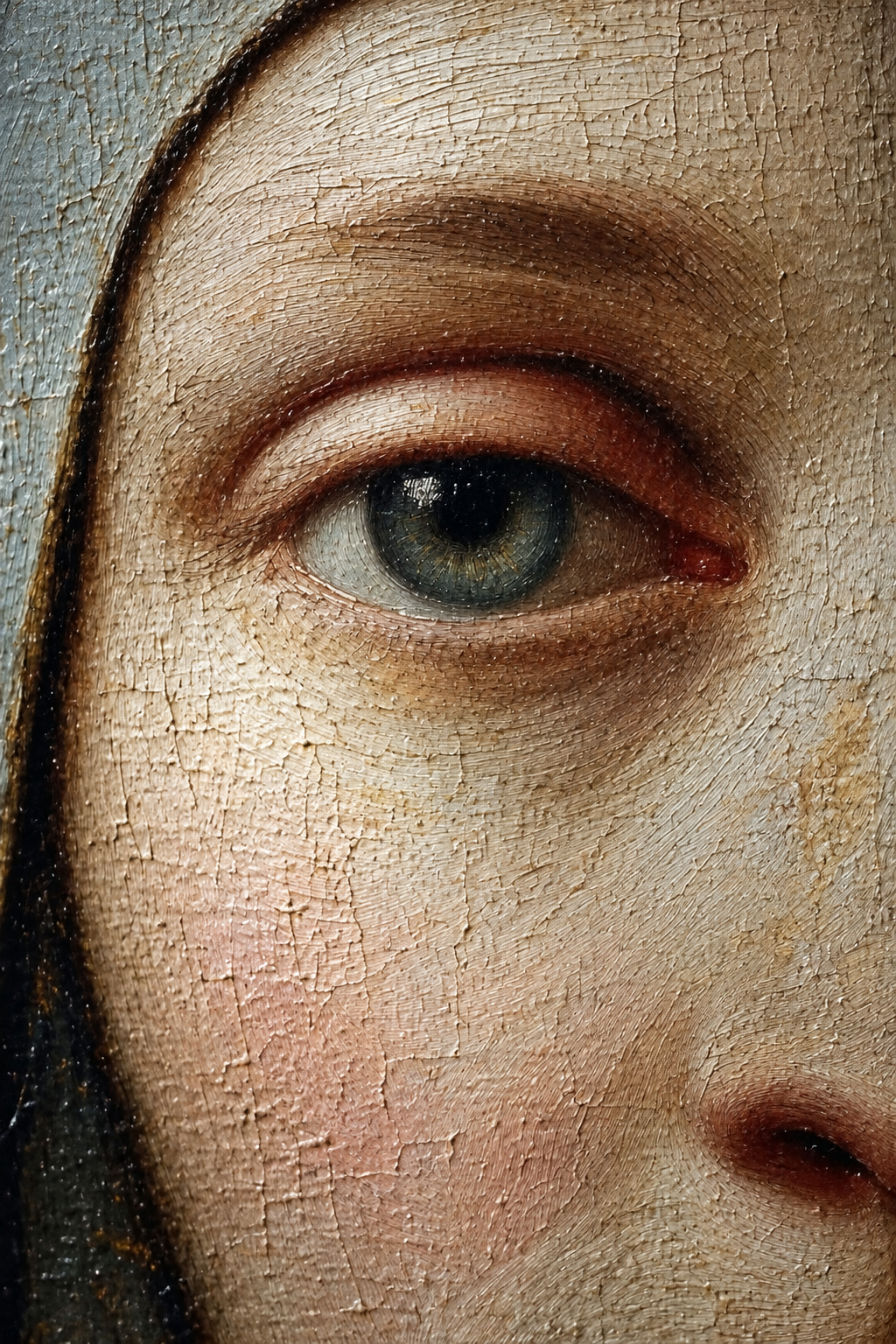
A Quiet Gaze Through Time draws the viewer into a small fragment of a painted face. A blue-gray eye rests beneath a softly arched eyebrow, surrounded by pale ivory, warm brown shadow, and a restrained blush of rose. The close crop leaves most of the face outside the frame, allowing a single gaze and the textured surface around it to carry the mood.
This newly created image evokes the appearance of an aged oil painting. Its crackled surface, layered brush marks, and subdued colors are part of that visual treatment; they do not establish a historical date, provenance, or connection to a particular surviving portrait. The work uses the language of an old painting to explore the feeling of encountering a presence across time.
The eye is the clearest point of recognition. Its dark pupil and small reflected light create a sense of attention, while the subtle colors of the iris keep the expression difficult to define. The gaze might feel thoughtful, distant, calm, or questioning. Leaving that emotion unresolved allows the viewer to notice how personal expectations can shape the way a face is read.
The tight framing also changes the experience of looking. Without a full expression, clothing, or setting to provide a story, small details become more important. The curve of the eyelid, the shadow below the brow, and the transition from cheek to nose invite slower attention. The image asks how much we can perceive from a fragment, and how much we supply through imagination.
Fine cracks spread across the painted skin, making the surface as visible as the face. As an artistic metaphor, these marks can suggest time, memory, and the changes that become part of an object’s appearance. They do not erase the gaze. Instead, the impression of presence continues through the uneven texture, allowing delicacy and endurance to coexist.
The brushwork introduces another layer of meaning. From a distance, separate marks become skin and shadow; close up, they remain traces of color and direction. That movement between image and surface offers a reflection on perception itself. We recognize a person in the arrangement of marks, yet we can also step back and see how the impression has been constructed.
The palette supports the quiet atmosphere. Cool blue-gray in the eye and the narrow background area contrasts with warmer tones around the eyelids and cheek. Dark hair along the edge gives the pale face a boundary, while soft light reveals the textured paint. The limited color encourages attention to small differences rather than dramatic effects.
Read as a reflection on inner life, the portrait fragment can suggest that a person is never fully contained in what is immediately visible. A gaze may invite connection without revealing a complete history. Looking with care includes recognizing that limit, allowing curiosity to remain alongside uncertainty rather than turning a first impression into a final judgment.
Ultimately, A Quiet Gaze Through Time is an invitation to notice what remains expressive within imperfection. Its imagined aged surface makes room for a meditation on memory and continuity, while the eye keeps the encounter intimate and human. The work offers no hidden message to decode, only a patient space in which to look again.
This newly created image evokes the appearance of an aged oil painting. Its crackled surface, layered brush marks, and subdued colors are part of that visual treatment; they do not establish a historical date, provenance, or connection to a particular surviving portrait. The work uses the language of an old painting to explore the feeling of encountering a presence across time.
The eye is the clearest point of recognition. Its dark pupil and small reflected light create a sense of attention, while the subtle colors of the iris keep the expression difficult to define. The gaze might feel thoughtful, distant, calm, or questioning. Leaving that emotion unresolved allows the viewer to notice how personal expectations can shape the way a face is read.
The tight framing also changes the experience of looking. Without a full expression, clothing, or setting to provide a story, small details become more important. The curve of the eyelid, the shadow below the brow, and the transition from cheek to nose invite slower attention. The image asks how much we can perceive from a fragment, and how much we supply through imagination.
Fine cracks spread across the painted skin, making the surface as visible as the face. As an artistic metaphor, these marks can suggest time, memory, and the changes that become part of an object’s appearance. They do not erase the gaze. Instead, the impression of presence continues through the uneven texture, allowing delicacy and endurance to coexist.
The brushwork introduces another layer of meaning. From a distance, separate marks become skin and shadow; close up, they remain traces of color and direction. That movement between image and surface offers a reflection on perception itself. We recognize a person in the arrangement of marks, yet we can also step back and see how the impression has been constructed.
The palette supports the quiet atmosphere. Cool blue-gray in the eye and the narrow background area contrasts with warmer tones around the eyelids and cheek. Dark hair along the edge gives the pale face a boundary, while soft light reveals the textured paint. The limited color encourages attention to small differences rather than dramatic effects.
Read as a reflection on inner life, the portrait fragment can suggest that a person is never fully contained in what is immediately visible. A gaze may invite connection without revealing a complete history. Looking with care includes recognizing that limit, allowing curiosity to remain alongside uncertainty rather than turning a first impression into a final judgment.
Ultimately, A Quiet Gaze Through Time is an invitation to notice what remains expressive within imperfection. Its imagined aged surface makes room for a meditation on memory and continuity, while the eye keeps the encounter intimate and human. The work offers no hidden message to decode, only a patient space in which to look again.










Comments
Comments appear after approval.
Log in to comment