
Community
Self-Discovery
The Watchful Eye and the Moth: A Study in Quiet Change
An engraved eye and a resting moth meet in an intimate portrait of attention, vulnerability, and the subtle changes we learn to notice.

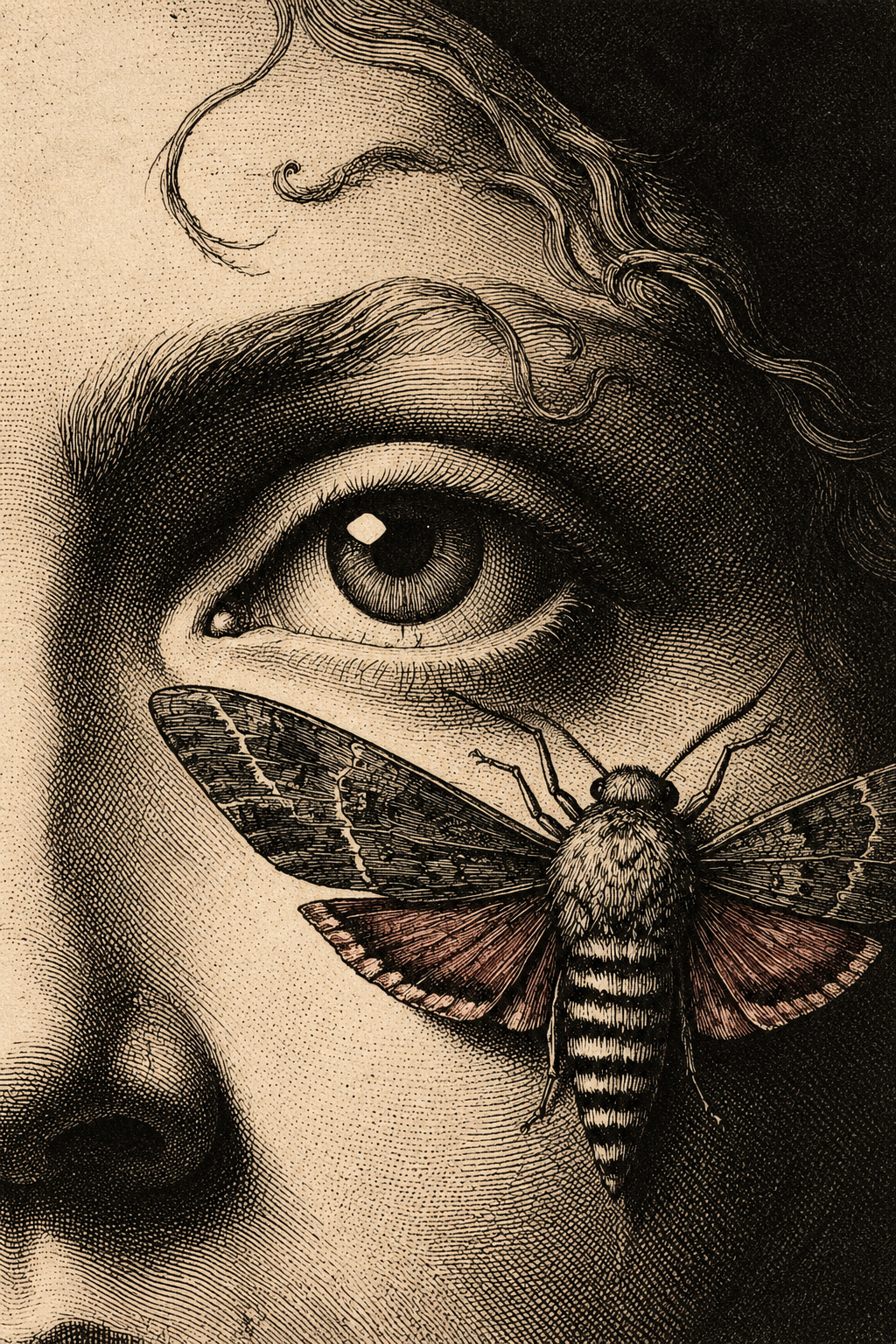
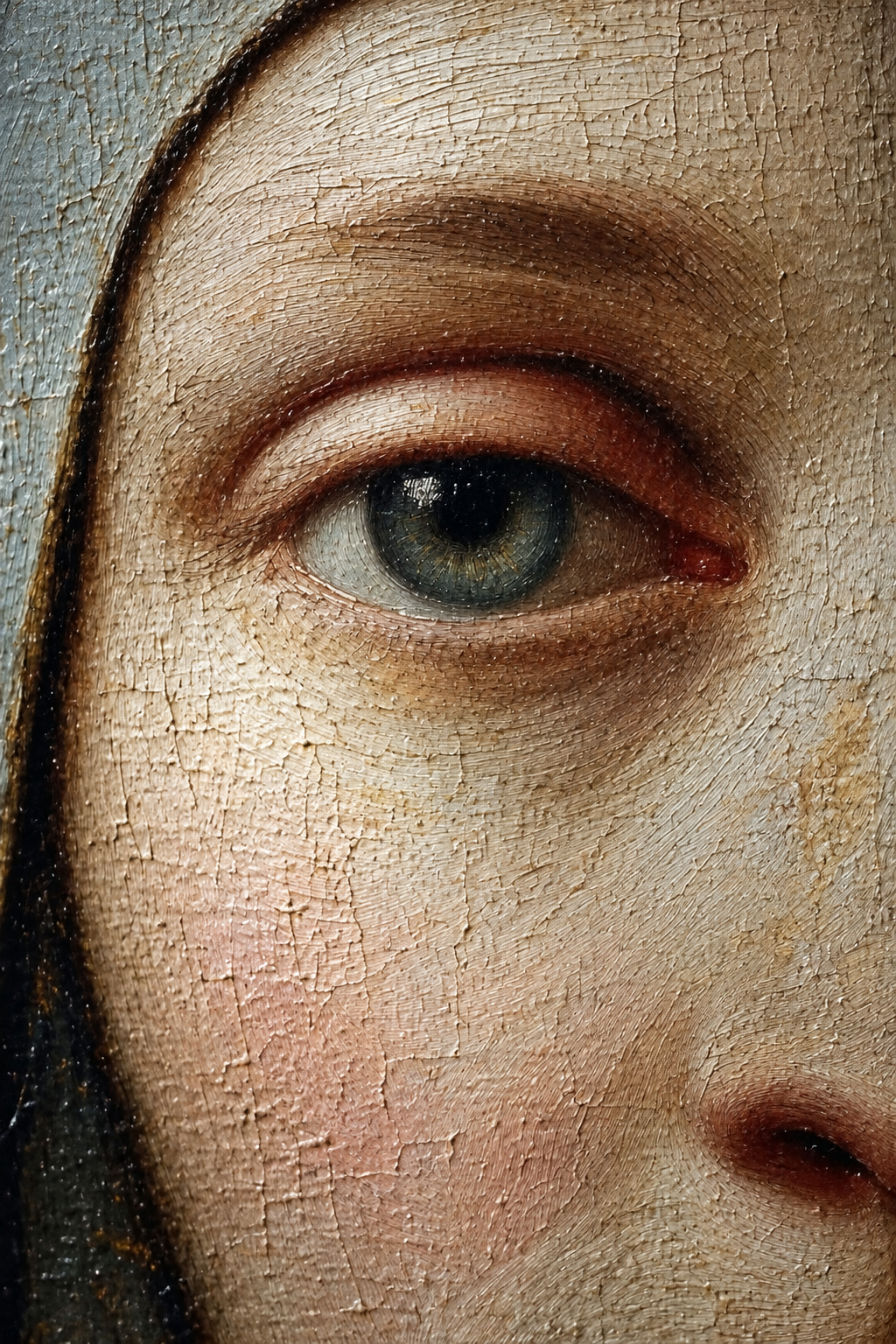
The Watchful Eye and the Moth: A Study in Quiet Change brings a human gaze and a delicate nocturnal creature into an unusually close encounter. Fine engraved lines shape the eye, brow, and cheek, while a large moth rests beneath the gaze with its wings open. Warm ivory, deep black, and a restrained hint of burgundy create a mood that is both intimate and mysterious. The image asks us to slow down and look at something easily overlooked.
The open eye serves as the composition’s center of attention. Its iris, lashes, and small reflected highlight make the act of looking feel immediate. Yet the gaze does not settle the meaning of the scene. It can suggest curiosity, alertness, or the vulnerable experience of allowing something unfamiliar to come close. The viewer becomes part of this exchange, observing an eye that seems equally capable of observing in return.
The moth introduces a different kind of presence. Its soft body and patterned wings contrast with the firm contours of the face, while its stillness gives the encounter a suspended quality. In this artwork, the moth can be read as a symbol of quiet change, sensitivity, or aspects of experience that remain outside our usual focus. These are possible artistic interpretations, not fixed meanings or predictions.
Placed against the cheek, the moth brings the natural world into direct contact with human perception. The closeness may feel tender, strange, or slightly unsettling. That ambiguity is part of the work. It invites reflection on how quickly we label an unfamiliar experience before examining what is actually present. A pause can leave room for curiosity alongside an initial reaction.
The motif of change comes through the moth’s association with a life that takes different forms. Within the image, this becomes a metaphor for developments that are not always dramatic or immediately visible. A shift in understanding may begin quietly: noticing a repeated response, questioning an old assumption, or becoming more attentive to a detail that previously escaped us. The artwork offers space for that reflection without promising a particular personal transformation.
The engraved surface gives equal care to skin and wing. Dense crosshatching creates shadow, while lighter marks reveal the curve of the eyelid and the fine structure of the insect. This shared treatment connects the two subjects. Both emerge through accumulated small lines, suggesting that a fuller impression can depend on details rather than a single sweeping statement.
The limited color keeps attention on form and texture. Dark wings echo the shadows around the eye, while the muted burgundy adds warmth without breaking the antique mood. Ivory areas offer breathing space within the intricate marks. The balance between light and shadow makes the scene readable while preserving its uncertainty.
The image can also be approached as a reflection on vulnerability. The eye is exposed, the moth appears fragile, and neither subject is shown in motion. Their proximity gives the composition a sense of trust or suspension, depending on the viewer’s perspective. It leaves room for more than one emotional response rather than prescribing a single lesson.
Ultimately, The Watchful Eye and the Moth invites careful attention to what feels small, unfamiliar, or easily dismissed. Its symbolism remains grounded in the visible encounter: a gaze, a resting creature, and the delicate marks that connect them. Quiet change may begin with looking more patiently and allowing an experience to reveal more than our first impression.
The open eye serves as the composition’s center of attention. Its iris, lashes, and small reflected highlight make the act of looking feel immediate. Yet the gaze does not settle the meaning of the scene. It can suggest curiosity, alertness, or the vulnerable experience of allowing something unfamiliar to come close. The viewer becomes part of this exchange, observing an eye that seems equally capable of observing in return.
The moth introduces a different kind of presence. Its soft body and patterned wings contrast with the firm contours of the face, while its stillness gives the encounter a suspended quality. In this artwork, the moth can be read as a symbol of quiet change, sensitivity, or aspects of experience that remain outside our usual focus. These are possible artistic interpretations, not fixed meanings or predictions.
Placed against the cheek, the moth brings the natural world into direct contact with human perception. The closeness may feel tender, strange, or slightly unsettling. That ambiguity is part of the work. It invites reflection on how quickly we label an unfamiliar experience before examining what is actually present. A pause can leave room for curiosity alongside an initial reaction.
The motif of change comes through the moth’s association with a life that takes different forms. Within the image, this becomes a metaphor for developments that are not always dramatic or immediately visible. A shift in understanding may begin quietly: noticing a repeated response, questioning an old assumption, or becoming more attentive to a detail that previously escaped us. The artwork offers space for that reflection without promising a particular personal transformation.
The engraved surface gives equal care to skin and wing. Dense crosshatching creates shadow, while lighter marks reveal the curve of the eyelid and the fine structure of the insect. This shared treatment connects the two subjects. Both emerge through accumulated small lines, suggesting that a fuller impression can depend on details rather than a single sweeping statement.
The limited color keeps attention on form and texture. Dark wings echo the shadows around the eye, while the muted burgundy adds warmth without breaking the antique mood. Ivory areas offer breathing space within the intricate marks. The balance between light and shadow makes the scene readable while preserving its uncertainty.
The image can also be approached as a reflection on vulnerability. The eye is exposed, the moth appears fragile, and neither subject is shown in motion. Their proximity gives the composition a sense of trust or suspension, depending on the viewer’s perspective. It leaves room for more than one emotional response rather than prescribing a single lesson.
Ultimately, The Watchful Eye and the Moth invites careful attention to what feels small, unfamiliar, or easily dismissed. Its symbolism remains grounded in the visible encounter: a gaze, a resting creature, and the delicate marks that connect them. Quiet change may begin with looking more patiently and allowing an experience to reveal more than our first impression.










Comments
Comments appear after approval.
Log in to comment