
Mapping Narrative Flow with Transitional Tarot Cards
This article teaches readers how to use transitional tarot cards to map narrative flow in a reading. Focusing on The Chariot (Major Arcana) and two Wands cards (3 of Wands and 8 of Wands), it explains symbolism from the Rider‑Waite‑Smith tradition, offers a beginner three‑node spread and advanced layered techniques, and gives step‑by‑step interpretation logic and practice exercises. The aim is skill development, not prediction: learn to read movement, tempo, and agency across a sequence.
Cards explored in this article
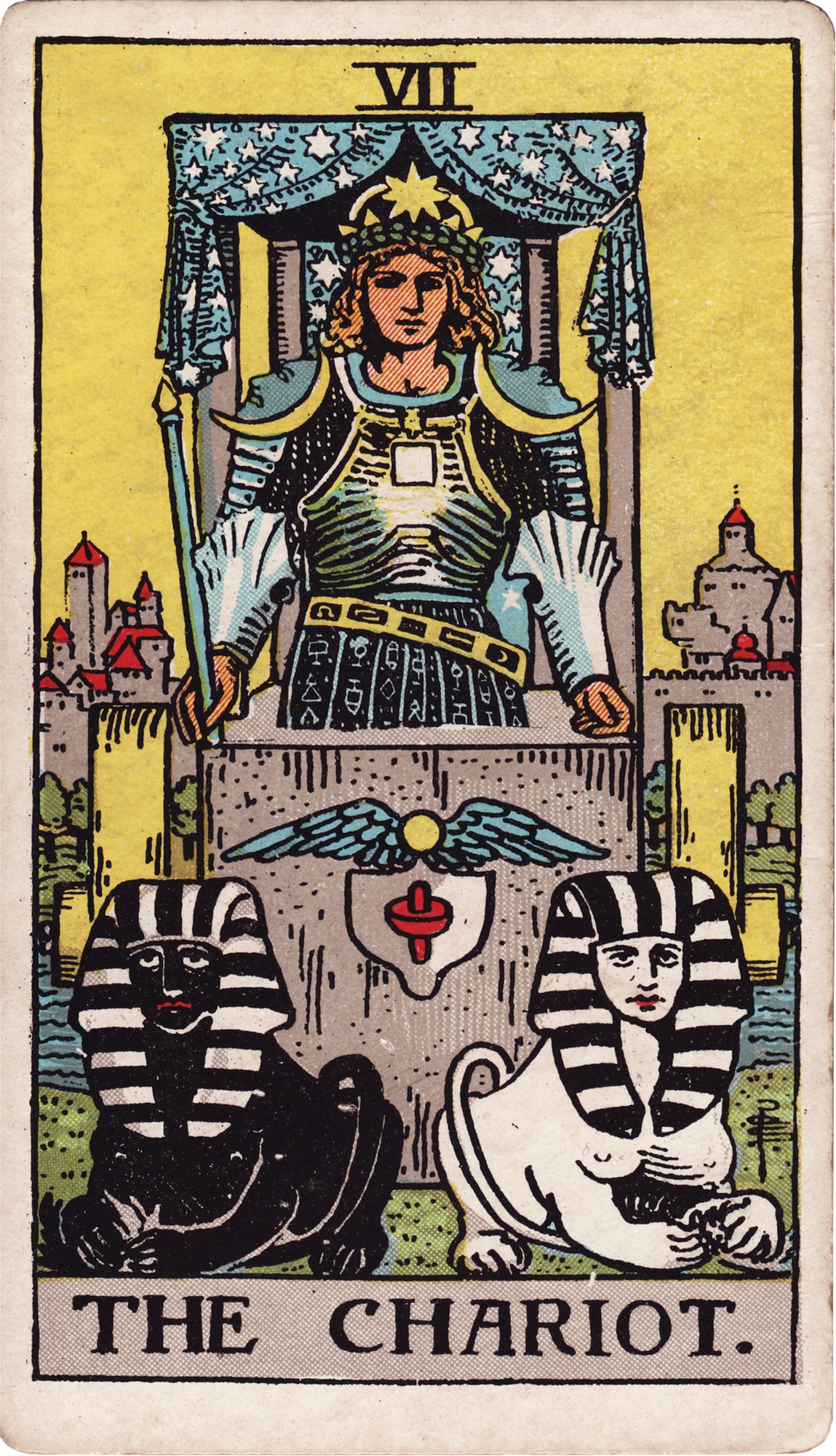 The Chariot
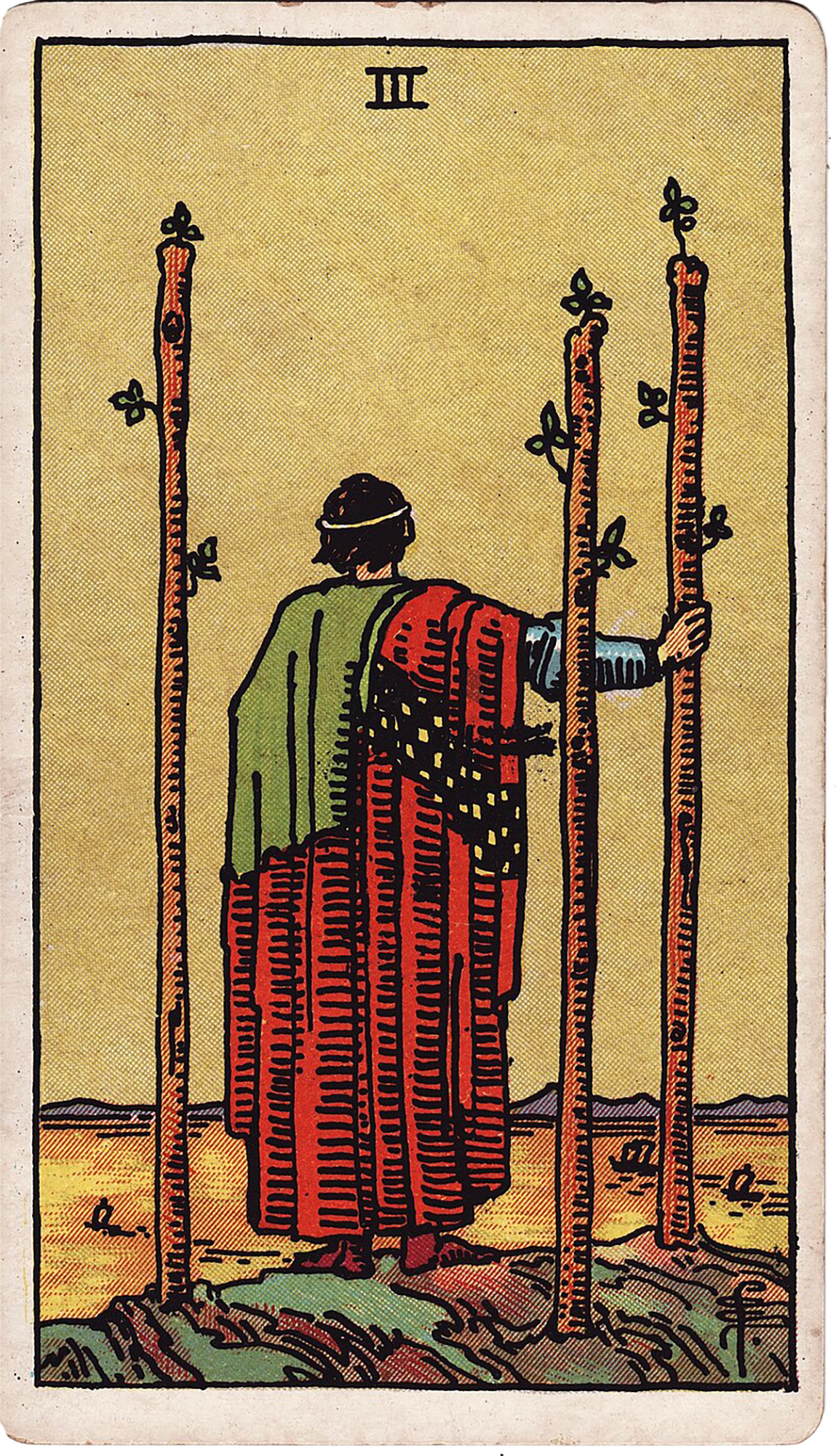 3 of Wands
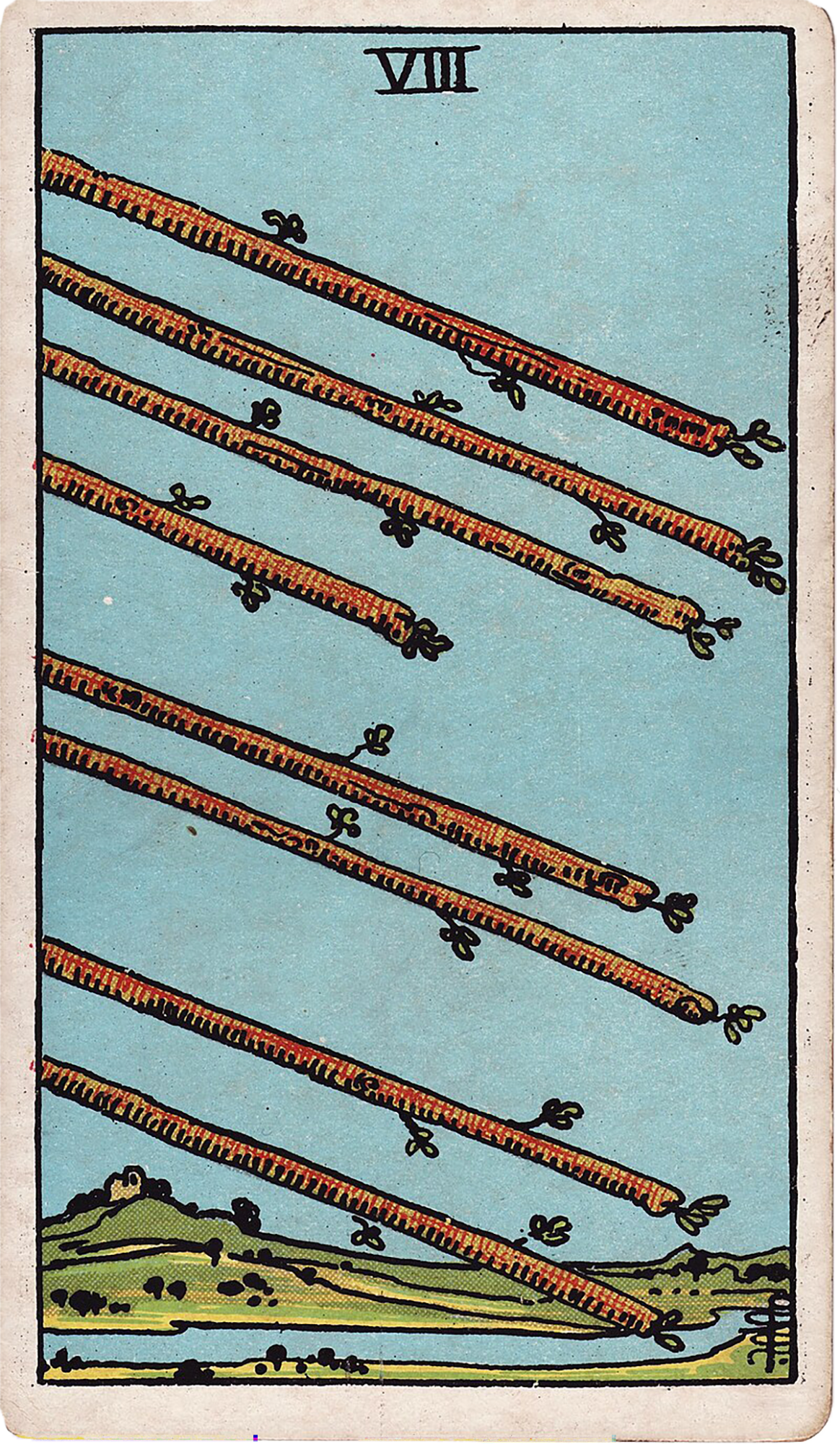 8 of Wands
Introduction — Why Transitional Cards Matter
Tarot readings are often read like snapshots: a moment, an energy, or a theme. Transitional cards, however, are the cards that signal movement between those moments. They tell you how a story changes — whether by decision, expansion, acceleration, delay, or misdirection. This article centers on three cards that commonly function as transition markers in many spreads: The Chariot, 3 of Wands, and 8 of Wands. Each of these cards emphasizes motion and the logic of progression but in different registers: will and direction (The Chariot), early outward development and stewardship (3 of Wands), and rapid alignment or communication (8 of Wands). By studying their imagery, traditional Rider‑Waite‑Smith symbolism, and the upright/reversed nuances provided for each, you can map the narrative flow in a reading with clearer questions and more useful guidance.
What I mean by "Transitional Tarot Cards"
A transitional card is any card that signals a change in tempo, agency, or direction within a narrative. It can mark: a turning point where a choice shapes the next stage; a bridge from intention to execution; an acceleration or deceleration of events; or an internal psychological shift that precedes an external change. Transitional cards are especially useful when you want to read a client's story as a sequence (where are they now, what needs to change, and which energies will carry them forward?). In practical work you will often see transitions emphasized by movement in the image: a driver steering, a figure looking toward the horizon, or elements streaking across a landscape. That is why The Chariot, 3 of Wands, and 8 of Wands are such rich examples for learning this approach: their imagery and conventional meanings all speak to direction, scope, and speed — the three axes of narrative flow.
Reading the Three Cards: Imagery and Traditional Symbolism
To map narrative flow, learn to read visual cues and traditional symbols. Use the Rider‑Waite‑Smith details as anchors when they appear in a modern deck image. Below I describe the primary visual and symbolic elements for each card and how they translate into story logic. The Chariot (Major Arcana) • Imagery: A charioteer stands in an armored chariot, often under a star-decorated canopy, pulled by two sphinxes (commonly one black and one white) or sometimes horses. The driver wears armor decorated with celestial imagery. The sphinxes indicate opposing forces. • Symbolic reading: The Chariot is about direction, will, and harnessing opposing impulses. In Rider‑Waite terms the charioteer’s control is not magic but discipline — aligning inner and outer forces to move forward. Look at the sphinxes for polarity (push/pull), the canopy for higher guidance, the armor for protection or readiness, and any city or road imagery for where the movement begins. • Practical narrative cues: look for where a deliberate choice or boundary is needed, where agency is available, or where a person is learning to steer despite conflict. 3 of Wands (Minor Arcana, Wands) • Imagery: A robed figure stands on a promontory looking out over ships on the water. Two wands stand planted behind them; the figure holds the third and watches the horizon. • Symbolic reading: This card is about early expansion and perspective. The watcher is past the first action and now waits to see results — it’s about expectation, planning, and preparedness for wider reach. Ships and horizon imagery speak to future returns and the scope of what’s possible. • Practical narrative cues: watch for preparation versus impatience, realistic scaling, and whether a project is in a stage of outward testing rather than completion. 8 of Wands (Minor Arcana, Wands) • Imagery: Eight wands streak diagonally through the air above a green landscape, sometimes crossing a river. The sense is of rapid transit. • Symbolic reading: 8 of Wands stands for quick movement, messages, and momentum aligning toward a destination. It usually means things shift fast once conditions align — often messages, travel, or an acceleration toward culmination. • Practical narrative cues: look for sudden clarity, the importance of timing, and the need to catch momentum without losing important context (the reversed card often warns of crossing wires or rushed errors).
Beginner Technique — Three‑Node Transitional Spread
This is a simple spread suitable for new readers who want to map a short narrative arc. Use three positions arranged left to right or top to bottom. Positions and questions 1) Current Trajectory — Where the situation currently points (What energy is moving this story forward?) 2) Necessary Correction or Choice — What needs to change or be chosen for a better outcome (What steering, boundary, or re‑alignment is required?) 3) Momentum/Next Stage — What kind of movement will follow if the correction is made (How will speed/communication/expansion look?) How to read using the supplied cards • If The Chariot appears in position 1 (Current Trajectory): read it as the querent presently exercising or needing to exercise deliberate direction. Note the sphinxes or canopy in the image and ask where opposing impulses are pulling them. Ask which concrete next step matches the scale of the charioteer's charge. Upright: encourage clear boundary and focused action. Reversed: the person may be driving without internal alignment — pause and re‑examine. • If 3 of Wands is in position 2 (Necessary Correction): interpret it as a call for stewardship and perspective. The correction could be patience, better preparation, clearer expectations, or simplifying goals. Upright: refine long‑view plans; reversed: fix unrealistic expansion or weak follow‑through. • If 8 of Wands is in position 3 (Momentum): read it as the likely tempo. Upright suggests quick progress and messages arriving; reversed suggests delays, crossed messages, or rushed movement. Use it to advise about timing and how to handle sudden change. Combine the cards: sequence logic When you read the spread, narrate the flow: 'Right now (position 1) you are in a charioteer mode: choosing direction and trying to align forces. To make this work (position 2) you need the perspective and preparation of the 3 of Wands: put structures in place and moderate expectations. If you do that, then (position 3) the 8 of Wands suggests things move quickly, with messages and travel arriving.' Practice tips for beginners • Read images first, then meanings. Name visible movement (wheels, horizon, streaking wands) before jumping to advice. • Ask stage-appropriate questions: steering questions with The Chariot; perspective questions with 3 of Wands; timing/communication questions with 8 of Wands. • Keep language probabilistic: this is a map of tendencies and possible next steps, not an absolute timeline.
Advanced Technique — Layered Narrative Mapping and Transitional Nodes
Once you are comfortable with the three‑node spread, expand your approach to map more complex narratives and conditional sequences. 1) Build a chain of transitional nodes Instead of one three‑card spread, create a chain of three‑card groups that represent consecutive beats: Beat A (status), Pivot A→B (transition set), Beat B (new status). For each pivot use the three positions (Trajectory / Correction / Momentum). Read the pivot set as the mechanism that moves the narrative from one beat to the next. This helps when clients describe a sequence of changes rather than a single problem. 2) Weighting and emphasis Assign visual weight to images: the card with the most active movement (in many decks 8 of Wands) will often skew tempo; The Chariot skews agency; 3 of Wands skews planning. When two cards point to the same axis (for example, Chariot + 8 of Wands both emphasizing forward drive), note intensity and the risk of overpush. If The Chariot appears reversed while 8 of Wands is upright, treat the reading as momentum without internal coherence — a recipe for overwhelm unless a corrective appears. 3) Reversals as internal vs external Use reversals to differentiate where the block is happening. In the supplied card notes, reversed meanings often mark internalized or delayed processes. Read a reversed Chariot as loss of direction or inner conflict; reversed 3 of Wands as unrealistic expectations or weak follow‑through; reversed 8 of Wands as delays or crossed messages. In layered mapping, a reversed transitional card between two upbeat cards suggests a private or psychological obstacle to external progress. 4) Conditional storylines and forking paths When you see mixed impulses, create conditional readings: 'If the querent chooses the Chariot's direct path, they will encounter the 8 of Wands tempo — but only if they first integrate the 3 of Wands planning stage.' Use these forks to give clients clear choices and likely consequences instead of vague predictions. 5) Visual chaining and posture detail Pay attention to posture and gaze. The Chariot's forward gaze and the 3 of Wands figure looking outward are different kinds of looking: one is steering, one is awaiting return. Use these micro‑differences to refine whether the moment needs bold direction, watchful adjustment, or reception of messages.
Interpretation Logic: Combining Direction, Tempo, and Scope
To interpret transitional cards together, use three analytical axes: 1) Direction/Agency (Who is steering?) — dominated by The Chariot. Ask whether action comes from conscious choice or external force. If The Chariot appears upright, agency is available; reversed, the agency is fragmented. 2) Scope/Perspective (How far must we plan?) — dominated by 3 of Wands. Ask whether the project requires long view, infrastructure, or realistic scaling. Upright indicates readiness for wider reach; reversed indicates premature expansion or poor scaffolding. 3) Tempo/Communication (How fast will change come?) — dominated by 8 of Wands. Use this to advise on timing, messages, and rapid shifts. Upright signals speed and alignment; reversed signals delays or miscommunication. Combine these axes in practice • Fast + Directed + Well‑Prepared (8 of Wands upright, The Chariot upright, 3 of Wands upright): high likelihood of rapid, disciplined expansion. Recommend clear boundaries, delegated tasks, and attention to administration. • Fast + Directed + Poorly Prepared (8 of Wands upright, The Chariot upright, 3 of Wands reversed): risk of burning ahead before foundations are ready. Advise a pause to shore up logistics. • Directed but Stalled (The Chariot reversed, 3 of Wands upright, 8 of Wands reversed): desire and perspective exist but momentum is blocked — internal reconciliation or boundary work is needed before external movement returns. Always articulate the conditionality. Use precise, stage‑appropriate counsel (e.g., 'strengthen one operational step' or 'clarify who is in charge of communication') rather than global statements.
Worked Examples — Reading Several Configurations
Concrete examples help you translate technique into voice. In each example imagine the three positions Current Trajectory / Necessary Correction / Momentum. Example 1 — The Chariot (upright) / 3 of Wands (upright) / 8 of Wands (upright) Read: The querent currently has clear will and is trying to steer despite opposition. The necessary correction is to hold long‑view perspective and practical preparation; they must shift from tactical drive to stewardship by organizing resources. If they do, momentum will arrive quickly: messages, movement, or a project shipment will accelerate. Advice: set one robust process now (a timeline, responsibility list), then open to rapid deployment. Example 2 — The Chariot (reversed) / 3 of Wands (upright) / 8 of Wands (upright) Read: There is an internal loss of direction or scattered effort that the querent may not be aware of. The 3 of Wands upright says perspective and preparation exist externally — perhaps others or systems are ready — but the person must reconcile inner conflict first. With internal work, the 8 of Wands momentum can be harnessed; without it, rushing forward will create chaos. Advice: pause to realign motives, then let the existing systems carry the acceleration. Example 3 — The Chariot (upright) / 3 of Wands (reversed) / 8 of Wands (reversed) Read: Strong agency or boundary is present, but planning is shaky and momentum is stalled or misdirected. This might manifest as someone who wants to push forward but faces logistical confusion and delays. The reading asks for simplification, clearer communication channels, and managing expectations rather than forcing immediate progress. Advice: create a short list of must‑have tasks and delay nonessentials. Example 4 — 3 of Wands (reversed) / The Chariot (upright) / 8 of Wands (upright) Read: The querent is facing weak follow‑through or unrealistic expectations. However, they have the internal capacity to choose direction and discipline (The Chariot upright). If they commit to the appropriate course correction — realistic milestones and modest goals — the result will be swift progress. Advice: use the charioteer's discipline to convert big plans into discrete actions so the fast momentum actually benefits the project.
Common Mistakes and How to Avoid Them
1) Reading movement as literal travel only Mistake: Equating wands‑movement with physical travel every time. Fix: Ask whether the movement appears as communication, internal momentum, or travel. 8 of Wands often means messages or alignment rather than literal trips. 2) Misusing reversals as merely "bad" Mistake: Treating a reversed card as an automatic negative. Fix: Read reversals as blocked or internalized energies per the supplied notes. A reversed card often indicates where work is required, not a fatal outcome. 3) Forcing a single linear story Mistake: Expecting all cards to form a tidy A→B→C plot. Fix: Allow for parallel processes — inner change may precede external momentum, or momentum may be conditional on a decision. 4) Ignoring small visual details Mistake: Skipping posture, gaze, and secondary symbols (sphinxes, ships, river). Fix: Use these cues to specify whether an obstacle is internal (sphinx polarity), logistical (ships and horizon), or timing related (streaking wands over landscape). 5) Overemphasizing timing without context Mistake: Telling clients exact dates from tempo cards. Fix: Use tempo words — immediate, short‑term, accelerating — and link to actions that influence timing (clearing obstacles, accepting help).
Practice Exercises and a Suggested Learning Routine
To internalize the method, use consistent practice. Daily micro‑practice (10–15 minutes) • Pull one card daily and journal its transitional implication for a current small decision. If you draw The Chariot, name one boundary you can set today; if you draw 3 of Wands, write one step that prepares future returns; if you draw 8 of Wands, notice speed in your day and how you handle messages. Weekly three‑node practice (30–60 minutes) • Pull three cards into the Current Trajectory / Necessary Correction / Momentum positions. Narrate the story in one paragraph. Repeat with reversed orientations. Compare your readings for differences in tone and consequence. Advanced chaining (60–90 minutes) • For a client issue or fictional plot, create a chain of two or three transitional pivots. Map possible forks and write short advisories for each fork. Feedback loop • Record your readings and results (when possible) and review after 2–6 weeks to see which interpretations guided useful action. Note when tempo predictions were accurate and when reversals described internal work rather than external delay.
Practical Reading Method — Step‑by‑Step Checklist
1) Lay out the spread and name positions in plain language (e.g., 'Trajectory / Correction / Momentum'). 2) Turn each card and pause for a full 10–20 seconds of image observation: posture, gaze, background, directional cues, and any polarities. 3) Read the supplied upright/reversed notes for each card and restate them in client‑centered language: 'This is about choosing direction' rather than 'You must do x.' 4) Map each card to the axes of Direction, Scope, and Tempo to see which needs emphasis. 5) Construct conditional sentences linking the cards: 'If X, then Y; if not X, then Z.' Offer actionable, stage‑appropriate tasks. 6) Avoid absolute timing. Use tempo categories (immediate, short, medium) and tie timing to client actions. 7) Ask clarifying questions to the querent that test your interpretation: 'Which of these feels like your action to take?' or 'Where are you waiting rather than steering?' 8) Close with a clear, small next step aligned to the dominant card's requirement (a boundary, a planning task, or a communication task).
Closing Notes — Reading as Responsible Story Crafting
Reading transitional cards is less about predicting an immutable future and more about mapping how a story can move. The Chariot, 3 of Wands, and 8 of Wands each bring a different vocabulary: steering and agency, perspective and expansion, and speed and communication. By learning to read their images and their upright/reversed nuance, you will sharpen your ability to offer clients clear choices, plausible consequences, and practical next steps. Treat each spread as a short script: identify the current act, the pivot, and the likely next beat, and then help the querent choose who will be the author of the next scenes.
Practice questions
• When you look at the image of The Chariot, which opposing forces (the sphinxes or horses) feel most like your current inner tension, and what one boundary could you set to align them?
• With 3 of Wands in mind, what realistic next step can you create that increases your project's reach without overextending your resources?
• If 8 of Wands arrives for you today, what communications or actions would you prioritize to take advantage of rapid momentum?
• Describe a time you moved quickly without clear direction. Which of the three cards best captures that experience and why?
• How do reversals show up in your life — as private blocks, delays, or corrective signals — and what small practice helps you transform one reversed card into upright action?
• Create a short three‑node reading for a project you care about. What conditional choices does the spread reveal, and which one feels most actionable?
Comments
Sign in to comment.
Continue learning
Interpreting the Dance of Justice and The Devil: Balancing Morality and Temptation in Tarot Readings
The combination of Justice and The Devil in tarot presents a profound exploration of morality, temptation, and personal accountability. This article unpacks how these cards influen...
Understanding The World Card in Personal Completion and New Cycles
The World card in tarot signifies completion, integration of lessons learned, and the threshold of new cycles. This article explores its nuanced meanings in upright and reversed po...
Mastering Tarot Timing Techniques for Accurate Readings
Timing in tarot readings can transform vague predictions into clear guidance about when events might unfold. This article explores practical timing techniques for beginners and adv...
Unlocking the Power Balance of The Emperor The Hierophant and Justice in Tarot Combinations
This article offers a deep exploration of the combined meanings of The Emperor, The Hierophant, and Justice cards within tarot spreads, focusing on how their energies interact to p...
Unlocking Leadership Qualities Through the Knight Queen and King of Wands
The Knight, Queen, and King of Wands embody evolving leadership qualities within the family suit of Wands. This article unpacks their traditional symbolism and the lessons each cou...
Mastering the Art of Combining The Magician The Empress and Ace of Pentacles for Manifestation and Abundance
This article offers a comprehensive exploration of how to skillfully combine The Magician, The Empress, and Ace of Pentacles tarot cards to enhance manifestation and attract abunda...
Mastering Intuitive Tarot Reading with The High Priestess The Hermit and The Moon for Deeper Insights
This article guides Tarot readers through mastering intuitive reading skills using three powerful cards: The High Priestess, The Hermit, and The Moon. It covers both beginner and a...
Unlocking Leadership and Responsibility Lessons Through the Court Cards of Swords
This article delves into the Court Cards of Swords—the Page, Knight, Queen, and King—to uncover the nuanced lessons they provide about leadership and responsibility. Rooted in the...
Exploring the Symbolic Language and Elemental Correspondences of the Court Cards of Cups for Emotional and Intuitive Insight
This in-depth article examines the Court Cards of Cups within the Rider-Waite-Smith tradition and the VoxFati Tarot Library context. It explores their rich symbolism and elemental...
Interpreting the Page of Swords for Career Love and Personal Growth
This article teaches how to read the supplied Page of Swords single-card draw across multiple life contexts. Using the card's Rider-Waite-Smith imagery and the provided upright and...