
Understanding The World Card in Personal Completion and New Cycles
The World card in tarot signifies completion, integration of lessons learned, and the threshold of new cycles. This article explores its nuanced meanings in upright and reversed positions, illustrating how the card's symbolism shifts across various personal contexts such as love, career, money, advice, challenge, person, outcome, and spiritual reflection. Using imagery from the traditional Rider-Waite-Smith deck, learners will discover how to apply The World card effectively in readings, avoid common mistakes, and deepen their interpretive skills by anchoring insights in the card’s classical symbols.
Cards explored in this article
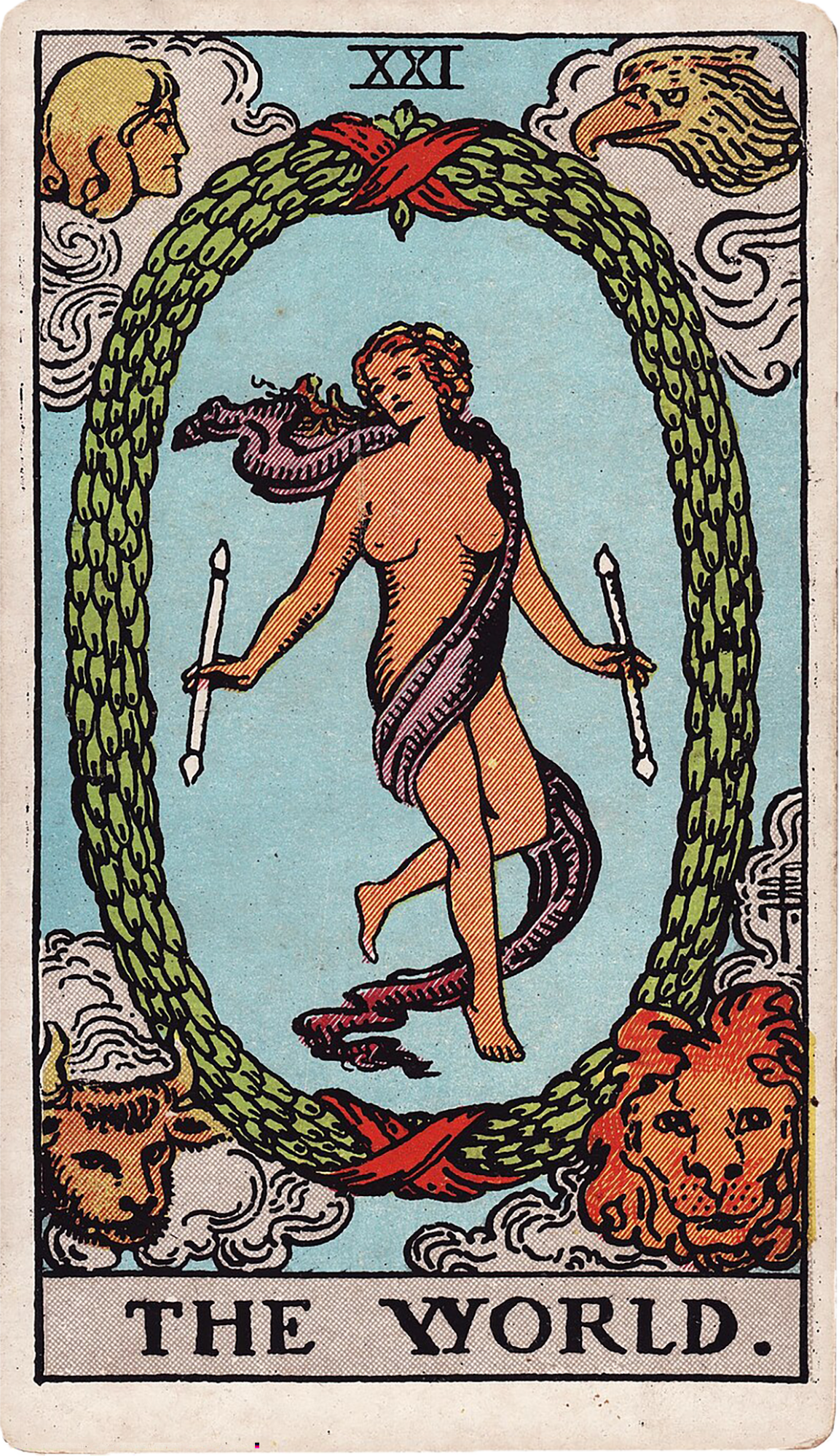 The World
Introduction to The World Card and Its Core Symbolism
The World card, traditionally the final Major Arcana card numbered XXI, symbolizes the completion of a journey and the integration of experience. Its dominant imagery includes a dancing figure surrounded by a wreath, symbolizing cyclical nature and wholeness, and the four living creatures representing the fixed signs of the zodiac (Taurus, Leo, Scorpio, Aquarius), emphasizing balance and universal completion. Upright, The World indicates successful completion, awareness of achievements, and readiness to embark on the next phase. Reversed, it signals incompletion, delays in closure, or difficulty internalizing lessons. In readings, the card invites reflection on where conscious engagement and deliberate action are required to progress.
Techniques for Reading The World Card in Different Contexts
When interpreting The World, it is essential to anchor your reading in the card's imagery: the central figure's dance suggests joy and freedom, the wreath implies cycles, and the four creatures denote stability and cosmic order. Begin by identifying the card's orientation (upright or reversed) and consider how that energy interacts with the question or situation. Use clarifying questions such as: Where is completion visible? What lessons have been integrated? What new cycle is beginning? Avoid reading The World as a simplistic 'end of all problems' or 'total success' card; instead, focus on its deeper message of conscious transition. In each context—love, career, money, etc.—frame interpretations around the themes of closure, integration, and forward movement.
The World in Love Contexts
Upright, The World in love readings can signify a relationship reaching a fulfilling milestone—such as commitment, understanding, or healing. It encourages embracing what has been learned about oneself and the partner to establish a stronger foundation. The card asks: How does completion of prior emotional cycles prepare you for deeper connection or new relationship phases? Reversed, it often points to unresolved issues, lingering doubts, or perfectionism that obstruct emotional closure. The World reversed invites introspection about repeating patterns or resisting honest communication. Practical reading tips include noting the card’s dance posture and wreath as symbols of harmony and cyclical love processes, and asking where boundaries or honest dialogue could aid progress.
The World in Career and Work Contexts
Within career readings, The World upright suggests successful project completion, recognition, or a sense of professional mastery that propels you toward new goals. It signals that conscious engagement with current achievements will catalyze the next cycle of growth. The card challenges you to identify the next deliberate step using what you have now, rather than waiting for ideal conditions. Reversed, it may reflect unfinished tasks, perfectionist delays, or internal resistance to career transitions. This blockage can manifest as frustration over stalled promotions or reluctance to leave a familiar but limiting role. The World’s universal symbols remind readers to consider the bigger picture, integrating lessons learned while preparing consciously for change.
The World Card in Financial Contexts
In money-related readings, The World upright signals a phase of financial stability, accomplishment, or the successful management of resources that enables new opportunities. It encourages working with current assets and recognizing progress rather than waiting for perfect conditions. The card’s cyclical wreath invites reflection on financial cycles—earning, saving, investing, and spending—and the importance of balance in those phases. Reversed, The World can highlight incompletion of financial goals, delays in achieving stability, or perfectionist tendencies that prevent decisive financial action. It may also indicate psychological blocks related to abundance or scarcity beliefs. Readers should seek where clearer boundaries or more deliberate choices could improve financial flow.
The World as Advice and Challenge
As advice, The World upright encourages embracing completion and integration while consciously choosing the next cycle. It suggests recognizing where your current actions embody the card’s lessons—completion, balance, and readiness—and encourages deliberate steps forward. The card asks readers to be honest with where clearer boundaries, direct responses, or more conscious choices would help progress. When reversed, The World as a challenge highlights distorted energy: unfinished business, excessive perfectionism, or difficulty accepting that it’s time to move on. The challenge is to identify where resistance or imbalance arises and to gently work toward internalizing lessons with patience. In either form, the card urges awareness and active engagement, not passive waiting.
The World as a Person
Representing a person, The World upright often describes someone joyful, accomplished, and balanced—someone who has integrated life lessons and expresses confidence in new beginnings. They may be visionaries or those who facilitate transitions for others, embodying wholeness and maturity. They tend to be grounded, open, and aware of cyclical patterns in life. Reversed, this person might struggle with closure, resist change, or have difficulty accepting their achievements. They may fixate on perfection or delay progressing due to fear or internal conflict. Readers should consider the card’s imagery: the dancing figure’s freedom and the wreath’s cyclical nature to evaluate whether this person embodies integration or is caught in incomplete cycles.
The World as an Outcome
When The World appears as an outcome card upright, it heralds the successful conclusion of a challenging phase and the birth of new opportunities. It promises integration of experiences and readiness to consciously engage with what comes next. However, it does not guarantee ease; rather, it describes a quality of engagement that can be constructive. The card invites readers to observe what lessons have been internalized and where clearer boundaries or choices will be necessary to maintain the momentum. Reversed, the outcome may reflect delays, incomplete cycles, or the need for continued work on internal patterns before progress is possible. It serves as a reminder that some cycles require patience and conscious adjustment.
The World in Spiritual Reflection
Spiritually, The World upright represents the integration of the self with universal principles, completion of a significant spiritual journey, and openness to new cycles of growth. The four fixed signs around the card ground spiritual achievement in cosmic order and balance, while the dancing figure embodies freedom and spiritual fulfillment. The card encourages conscious reflection on where spiritual lessons are already embodied and how to take the next deliberate step in spiritual evolution. Reversed, The World may signify blocked spiritual progress, resistance to integration, or difficulty recognizing that a phase of spiritual growth is complete. It invites compassionate inner work, acknowledging where energy is distorted or delayed and gently working toward deeper honesty and balance.
Common Mistakes and Practical Reading Advice
One common mistake is interpreting The World simplistically as a guaranteed happy ending or effortless success. Instead, the card highlights the quality of conscious integration and deliberate transition rather than automatic ease. Another error is neglecting the card's traditional symbols—such as the wreath and four creatures—which provide critical clues about cycles and cosmic balance. Practically, readers should always ask: What completion is occurring? What lessons have been learned? Where is conscious engagement required? Avoid forcing the card’s message to fit overly optimistic or pessimistic narratives. Always contextualize upright and reversed meanings with surrounding cards and the question’s domain. Finally, encourage querents to consider which part of The World’s lesson is already present in their behavior to foster empowerment and clarity.
Practice questions
• In what areas of your life do you sense cycles reaching completion or renewal?
• How do you recognize when enough has been accomplished to consciously move forward?
• Where might perfectionism or resistance be blocking your progress according to The World reversed?
• What deliberate choice or clearer boundary could help you integrate recent lessons more fully?
• How can you apply The World’s symbolism of balance and wholeness to your current challenges?
Comments
Sign in to comment.
Continue learning
Interpreting the Dance of Justice and The Devil: Balancing Morality and Temptation in Tarot Readings
The combination of Justice and The Devil in tarot presents a profound exploration of morality, temptation, and personal accountability. This article unpacks how these cards influen...
Mastering Tarot Timing Techniques for Accurate Readings
Timing in tarot readings can transform vague predictions into clear guidance about when events might unfold. This article explores practical timing techniques for beginners and adv...
Unlocking the Power Balance of The Emperor The Hierophant and Justice in Tarot Combinations
This article offers a deep exploration of the combined meanings of The Emperor, The Hierophant, and Justice cards within tarot spreads, focusing on how their energies interact to p...
Unlocking Leadership Qualities Through the Knight Queen and King of Wands
The Knight, Queen, and King of Wands embody evolving leadership qualities within the family suit of Wands. This article unpacks their traditional symbolism and the lessons each cou...
Mastering the Art of Combining The Magician The Empress and Ace of Pentacles for Manifestation and Abundance
This article offers a comprehensive exploration of how to skillfully combine The Magician, The Empress, and Ace of Pentacles tarot cards to enhance manifestation and attract abunda...
Mastering Intuitive Tarot Reading with The High Priestess The Hermit and The Moon for Deeper Insights
This article guides Tarot readers through mastering intuitive reading skills using three powerful cards: The High Priestess, The Hermit, and The Moon. It covers both beginner and a...
Unlocking Leadership and Responsibility Lessons Through the Court Cards of Swords
This article delves into the Court Cards of Swords—the Page, Knight, Queen, and King—to uncover the nuanced lessons they provide about leadership and responsibility. Rooted in the...
Exploring the Symbolic Language and Elemental Correspondences of the Court Cards of Cups for Emotional and Intuitive Insight
This in-depth article examines the Court Cards of Cups within the Rider-Waite-Smith tradition and the VoxFati Tarot Library context. It explores their rich symbolism and elemental...
Interpreting the Page of Swords for Career Love and Personal Growth
This article teaches how to read the supplied Page of Swords single-card draw across multiple life contexts. Using the card's Rider-Waite-Smith imagery and the provided upright and...
Symbols of Transformation Across Death The Hanged Man and The Tower
This article examines how The Hanged Man, Death, and The Tower encode different but related modes of transformation. Using Rider‑Waite‑Smith imagery and the supplied card contexts,...