
Symbols of Transformation Across Death The Hanged Man and The Tower
This article examines how The Hanged Man, Death, and The Tower encode different but related modes of transformation. Using Rider‑Waite‑Smith imagery and the supplied card contexts, it distinguishes suspension, ending, and rupture as readable processes. The piece gives step‑by‑step reading techniques, example spreads and combinations, guidance for reversals, and common interpretive mistakes to avoid.
Cards explored in this article
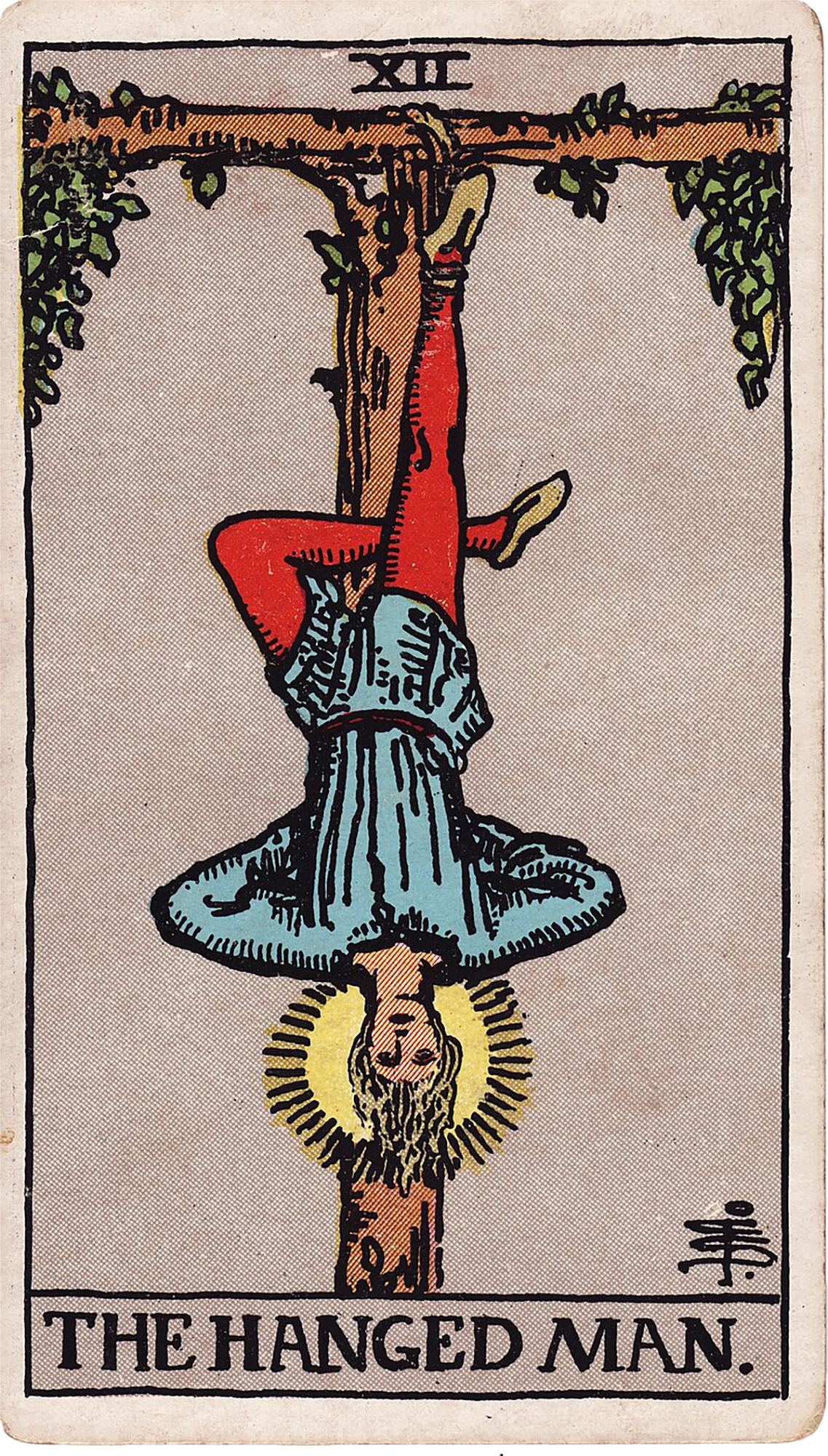 The Hanged Man
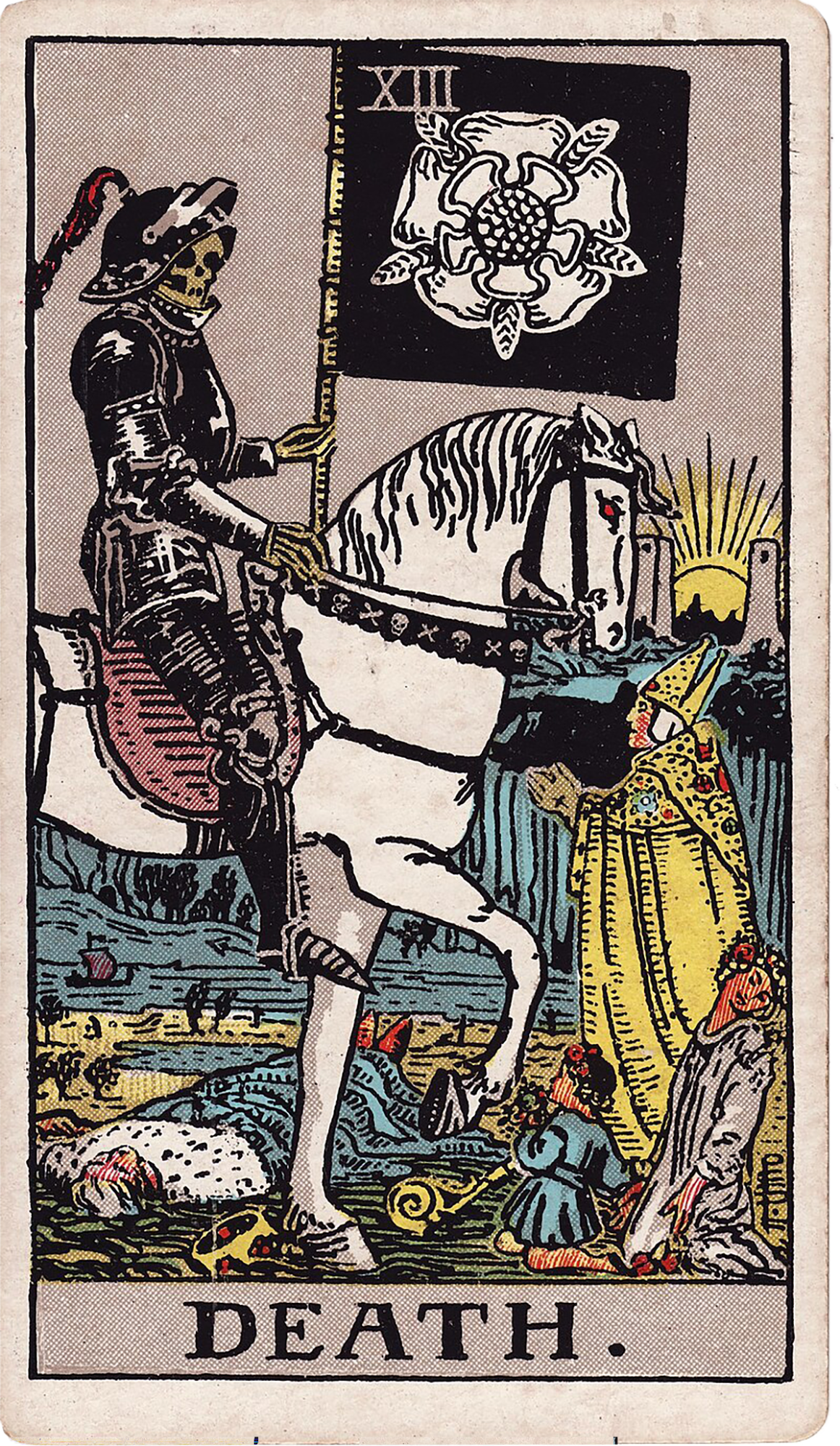 Death
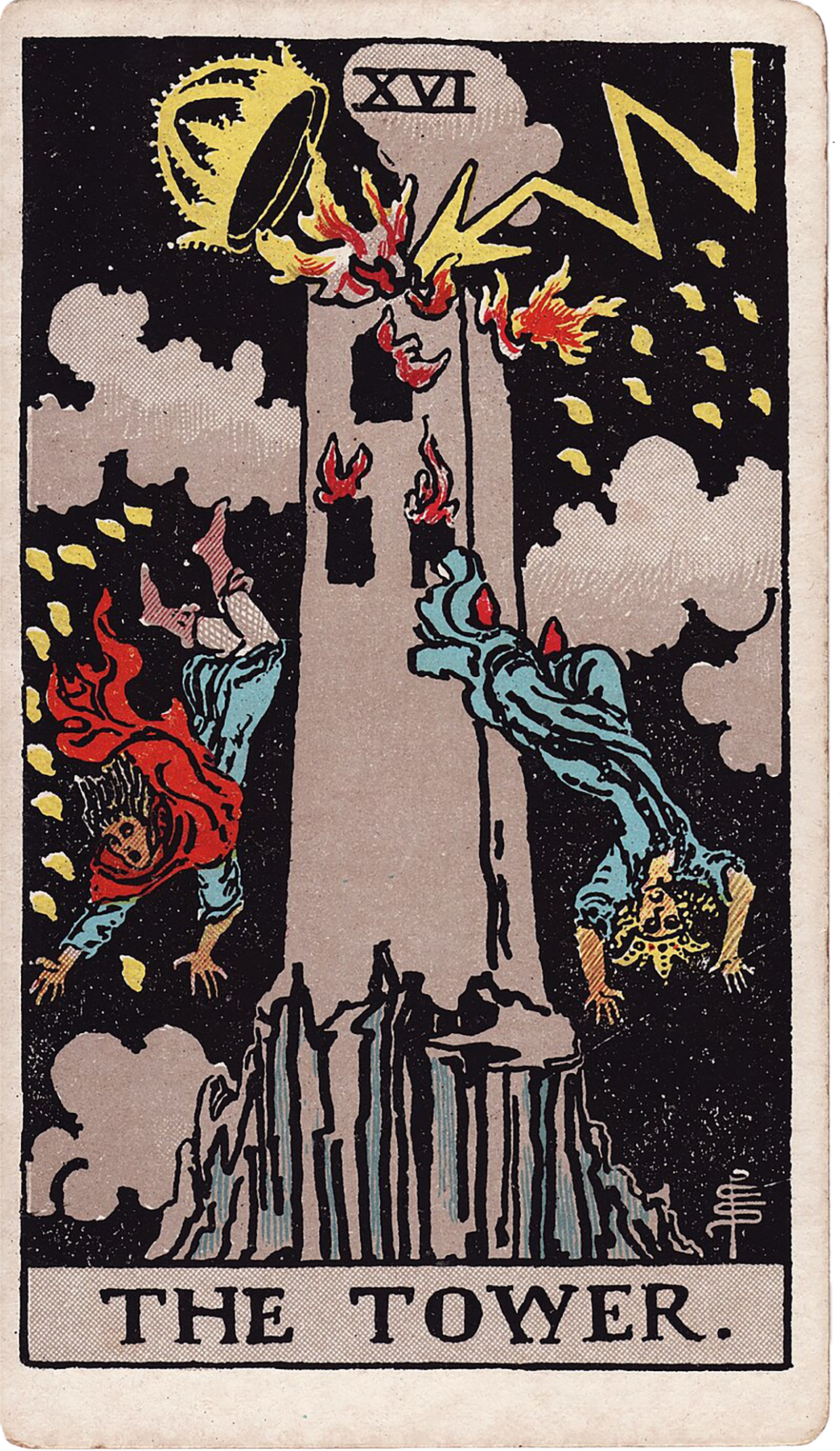 The Tower
Introduction Transformations in the Major Arcana
Transformation is a central theme of the Major Arcana; it appears in many forms across the deck. This article focuses on three cards supplied for your study: The Hanged Man, Death, and The Tower. Each card represents a distinct modality of change. The Hanged Man (upright: deliberate pause and perspective-shift; reversed: stagnation or resisted surrender), Death (upright: allowing endings to complete; reversed: clinging to the past), and The Tower (upright: collapse of false structures; reversed: delayed collapse or fear of necessary change) are not identical in meaning, but they speak to interlocking processes. Learning to read them together — and to read their images closely — gives you tools to interpret transformation as a lived sequence rather than a single dramatic event.
Why imagery matters Learn to read pictures not slogans
Tarot teaching often slips into catchphrases. Those are useful anchors, but they miss nuance. Rider‑Waite‑Smith (RWS) imagery is deliberately specific. For each supplied card, look at posture, objects, colors, and relationships in the scene. The Hanged Man shows an inverted figure suspended from a living tree (the wood of experience), a serene face with a halo, and crossed legs often read as the shape of the number 4. These details point to chosen suspension, inner acceptance, and a structural reorientation rather than passive victimhood. Death in RWS is a black armored figure on a white horse carrying a banner with a white rose against a dark field; behind him a rising sun suggests inevitable renewal following the passage. People of differing social orders appear to stress universality. The Tower depicts lightning striking a crown, flames bursting from windows, and two figures cast free — a symbol of sudden disclosure and the removal of fragile, human-made edifices. Anchoring each interpretation to these visual elements prevents reductive readings and keeps your work honest and concrete.
The Hanged Man Close visual and symbolic reading
The supplied card text underscores the Hanged Man's emphasis on 'pausing deliberately, releasing control, and allowing a different perspective to transform understanding.' Using RWS detail: the inverted posture reverses habitual perception; suspension from a living tree (not a gallows) means the pause is integrated into life rather than punitive; the halo shows inner clarity achievable in the pause; the crossed legs (4) imply structure, not chaos. Upright, ask where conscious delay, nonreactivity, or voluntary small sacrifices could produce insight. Practically, The Hanged Man often marks a moment when the questioner has enough information to take a proportionate next step, rather than waiting for a full resolution. Reversed, the supplied reversal text points you toward stagnation, martyrdom, or clinging to passive patterns. Imagewise, the serenity can turn into stubbornness; the suspension is present but its purpose is lost. In readings, check surrounding cards: are they mobilizing energy that the Hanged Man refuses to let in, or is the Hanged Man enabling a careful recalibration before a new phase?
Death Close visual and symbolic reading
The supplied Death card description emphasizes 'allowing an ending to be real' and 'making room for transformation.' RWS imagery reinforces this: the skeletal or armored rider on a pale horse represents the inevitability and impartiality of transformational endings; the banner bearing a white rose suggests purification and clarity after loss; the rising sun in the background signals that endings are cyclical and lead toward light. Upright Death indicates that a form is finished and must be released as a real, social and internal process. This is often psychological: acknowledging loss, grieving, or terminating a role. Reversed, the supplied text points to clinging, fear of change, or attempts to resurrect a completed form. Image cues in reversal can be read as a reluctance to turn toward the sun or as attempts to hide from the universality shown in the card. In practice, the reading question is not 'will something die?' but 'which structure, identity, or arrangement needs closure so the next form can emerge?'
The Tower Close visual and symbolic reading
The Tower's supplied upright meaning centers on 'responding honestly to a sudden truth' and letting false structures fall. RWS details are stark: lightning (sudden illumination), the crown broken (hubris or egoic structure dismantled), flames consuming the interior (purification by fire), and two falling figures (loss of footing and previous certainties). Upright Tower denotes rupture that reveals what is real among rubble. Reversed, per the supplied text, it often points to fear of necessary change, repeated crises, or attempts to reassemble a broken structure without addressing the underlying flaw. Imagewise, when reversed, that lightning can be misinterpreted as avoidable rather than revealing. As a reader, orient to whether the Tower is an unavoidable truth exposure or a chance to reorganize power and belief once the dust settles.
How these three cards relate A process model of transformation
Think of the three cards as stages or styles of transformative process rather than single, isolated symbols. The Tower often functions as rupture — a structural exposure that forces everything into question. Death acts as the ritualized ending that accepts completion and clears space for reconfiguration. The Hanged Man represents the stilled, reflective interior work that either precedes or follows those outer events: deliberate pause to gain perspective, or voluntary suspension to integrate what has changed. In practical readings, sequences matter. For example, Tower → Death → Hanged Man can describe a shock that breaks a situation, an acceptance of the ending, and then a necessary period of reflection before rebuilding. Conversely, Hanged Man → Death may indicate that a deliberate pause made an ending possible. But these sequences are not rigid: sometimes Death precedes Tower (an ending exposes deeper corruptions), or the Hanged Man sits between repeated Towers as the querent refuses to act. Always test sequence hypotheses with temporal questions and neighboring cues.
Techniques for reading transformation Notice, sequence, and use the ask‑questions
Technique 1 — Notice the dominant modality: Is the image about rupture (Tower), cessation and re-synthesis (Death), or voluntary suspension (Hanged Man)? Label the energy before you add story. Technique 2 — Sequence cards by temporal logic. Ask whether one card is a cause, consequence, or compensation for another. Use phrasing like 'Did A lead to B?' Technique 3 — Use the supplied upright/reversed prompts as practical questions during the session. For The Hanged Man: where would a deliberate pause or new perspective move the situation? For Death: what needs honest completion to allow new form? For The Tower: what false structure requires honest response? Technique 4 — Map the client's agency. Are they being acted upon (Tower as external blow), choosing an ending (Death upright as decision), or choosing a pause (Hanged Man upright as practiced surrender)? Technique 5 — Visual micro‑reading. Point to a detail in the displayed card image — the halo, the banner, the lightning — and ask the querent what that symbol brings up for them. That converts images into lived metaphor.
Practical reading method Step by step for a session
1) Set a focused question that frames transformation in terms of process (for example, 'What process would help me move from attachment to acceptance in this situation?'). 2) Pull or place the supplied cards in a simple three‑position spread: Force/Trigger (what initiated change), Transition (what is happening in the middle), Next Step (what to do now). 3) Identify which supplied card occupies which position and read its image literally and symbolically. 4) Use the supplied upright/reversed card contexts to generate clarifying questions: 'Is the Hanged Man inviting a deliberate pause or resisting one?' 'Is Death marking a real ending or a stubborn cling?' 'Is the Tower an unavoidable exposure or a warning of repeat collapse?' 5) Translate that language into proportionate actions: notice, name the ending, make one boundary, decide on one small deliberate pause. 6) Close by asking the querent to name one concrete next step informed by the card images (e.g., 'I'll schedule a conversation,' 'I'll stop reviving the old project,' 'I'll stay present and slow my reaction').
Example readings Three brief vignettes anchored to the images
Example 1 — Spread: Tower (trigger) / Death (transition) / Hanged Man (next step). The Tower image of lightning exposing a crowned structure indicates a sudden public disclosure in a workplace. Death upright suggests the role is finished and must be acknowledged; the rider's banner with the white rose invites a dignified closing. The Hanged Man upright as next step suggests a temporary withdrawal from action to reframe identity before seeking new work. Suggested action: allow and communicate a clean ending, then take a deliberate week to reorient values before job hunting. Example 2 — Spread: Hanged Man (trigger) / Death (transition) / Tower (next step). Here, the Hanged Man upright suggests that the querent's prolonged pause or refusal to act has reached a limit. Death upright indicates the form must complete; the question is whether the pause will be used to close or to avoid. The Tower as possible next step warns that if the ending is not acknowledged honestly, sudden rupture may follow. Suggested action: use the pause to sign documents or announce changes to prevent a harsher collapse later. Example 3 — Single‑card pull: The Hanged Man reversed. Using the supplied reversal text, the card points to stalled learning and martyrdom. In the RWS image, the halo is still present but misused. Practical line: ask what the querent is unwilling to learn from this pause; name one behavior to stop and one small, active choice to make today.
Common mistakes and how to avoid them
Mistake 1 — Treating these cards as single outcomes (Death = literal death). Correction: read symbolically and ask clarifying questions about endings and form change. Mistake 2 — Equating The Hanged Man with passivity or laziness. Correction: emphasize voluntary suspension, the living tree, and the halo; ask whether the pause is chosen and what it accomplishes. Mistake 3 — Turning The Tower into moral panic or sensationalism. Correction: read lightning as illumination and the crown's fall as the collapse of unjustified certainty; ask what truth is being revealed. Mistake 4 — Ignoring reversals or using them as moral judgments. Correction: use the supplied reversed descriptions to ask where energies are blocked or exaggerated; reversals often show work to be done, not final verdicts. Mistake 5 — Ignoring sequencing and context. Correction: always look for neighboring cards and timeline cues; a Tower next to a Hanged Man will mean something different than Tower next to Death.
Interpreting reversals Practical logic and questions
The supplied reversal notes for each card are consistent: a reversed state usually indicates distortion, blockage, or private internalization of the card's upright quality. For The Hanged Man reversed, ask: where is pause becoming avoidance or martyrdom? For Death reversed, ask: what are you refusing to let go of, and what would honest closure require? For The Tower reversed, ask: what necessary collapse are you resisting, or what repeated crisis pattern needs confronting? Practical method: when you see a reversal, slow down. Read the reversed card as a diagnosis of friction. Use open, nonjudgmental questions to help the querent identify one small corrective step. For example, if Death is reversed, the corrective might be naming the ending publicly; if The Hanged Man is reversed, it might be actively choosing to move after a set date.
Bringing it together Synthesis and practice suggestions
Practice exercise 1 — Image journaling: Place the supplied images of The Hanged Man, Death, and The Tower in front of you. Spend ten minutes describing each image in sensory detail without labeling it. Then write what each image suggests about time, bodily posture, and social outcome. Practice exercise 2 — Pivot spread: Layout three positions labeled: What must end (Death), What must be seen (Tower), What must be waited for (Hanged Man). Pull cards or place the supplied ones in these positions and interpret by asking the specific question tied to each card's upright/reversed text. Practice exercise 3 — Partner practice: One person shuffles while the other names a transformational situation. Pull one card and practice the sequence: notice image, ask the supplied card question, convert the insight into one doable action. Over time, your interpretations will gain specificity and avoid formula. Keep returning to the RWS visual details in your supplied cards: they anchor abstract meanings to lived images.
Conclusion Using these cards ethically and effectively
The Hanged Man, Death, and The Tower are powerful because they describe real modes of change: suspension and reorientation, ending and clearing, and exposure and collapse. Your job as a reader is to translate those archetypal energies into actionable, proportionate guidance for a querent. Avoid sensationalism, honor the client's agency, and use the supplied upright and reversed prompts as clarifying instruments rather than final verdicts. Anchor every interpretation to the visible imagery on the cards — the halo, the banner, the lightning — and to one concrete next step the querent can try. That is how symbolic depth becomes practical aid.
Practice questions
• When you look at the supplied image of The Hanged Man, which visual detail (halo, tree, posture) speaks most strongly to you and why?
• How would you describe the difference between an ending that Death upright asks for and a collapse that the Tower depicts?
• Think of a recent change in your life. Which of the three supplied cards best describes its mode (pause, ending, rupture) and what does that imply about your next step?
• How can you tell, during a reading, whether a Hanged Man is a wise pause or a symptom of avoidance?
• If a reversal appears, what single, proportionate corrective action could you suggest instead of dramatic overhaul?
Comments
Sign in to comment.
Continue learning
Interpreting the Dance of Justice and The Devil: Balancing Morality and Temptation in Tarot Readings
The combination of Justice and The Devil in tarot presents a profound exploration of morality, temptation, and personal accountability. This article unpacks how these cards influen...
Understanding The World Card in Personal Completion and New Cycles
The World card in tarot signifies completion, integration of lessons learned, and the threshold of new cycles. This article explores its nuanced meanings in upright and reversed po...
Mastering Tarot Timing Techniques for Accurate Readings
Timing in tarot readings can transform vague predictions into clear guidance about when events might unfold. This article explores practical timing techniques for beginners and adv...
Unlocking the Power Balance of The Emperor The Hierophant and Justice in Tarot Combinations
This article offers a deep exploration of the combined meanings of The Emperor, The Hierophant, and Justice cards within tarot spreads, focusing on how their energies interact to p...
Unlocking Leadership Qualities Through the Knight Queen and King of Wands
The Knight, Queen, and King of Wands embody evolving leadership qualities within the family suit of Wands. This article unpacks their traditional symbolism and the lessons each cou...
Mastering the Art of Combining The Magician The Empress and Ace of Pentacles for Manifestation and Abundance
This article offers a comprehensive exploration of how to skillfully combine The Magician, The Empress, and Ace of Pentacles tarot cards to enhance manifestation and attract abunda...
Mastering Intuitive Tarot Reading with The High Priestess The Hermit and The Moon for Deeper Insights
This article guides Tarot readers through mastering intuitive reading skills using three powerful cards: The High Priestess, The Hermit, and The Moon. It covers both beginner and a...
Unlocking Leadership and Responsibility Lessons Through the Court Cards of Swords
This article delves into the Court Cards of Swords—the Page, Knight, Queen, and King—to uncover the nuanced lessons they provide about leadership and responsibility. Rooted in the...
Exploring the Symbolic Language and Elemental Correspondences of the Court Cards of Cups for Emotional and Intuitive Insight
This in-depth article examines the Court Cards of Cups within the Rider-Waite-Smith tradition and the VoxFati Tarot Library context. It explores their rich symbolism and elemental...
Interpreting the Page of Swords for Career Love and Personal Growth
This article teaches how to read the supplied Page of Swords single-card draw across multiple life contexts. Using the card's Rider-Waite-Smith imagery and the provided upright and...