
Tarot Wound Symbols How Pain Appears and Heals
This article examines how three Swords cards from the Rider‑Waite tradition—3 of Swords, 9 of Swords, and 10 of Swords—function as wound symbols in family contexts. Focusing on imagery, conventional meanings, and reading technique, it explains how pain shows up in language, thought, and repeated cycles; how to distinguish naming, amplification, and endings; and how to use spreads and interventions that move toward recovery rather than simply diagnosing hurt. Practical examples, common mistakes, and step‑by‑step reading logic help learners apply these cards in family symbolism studies.
Cards explored in this article
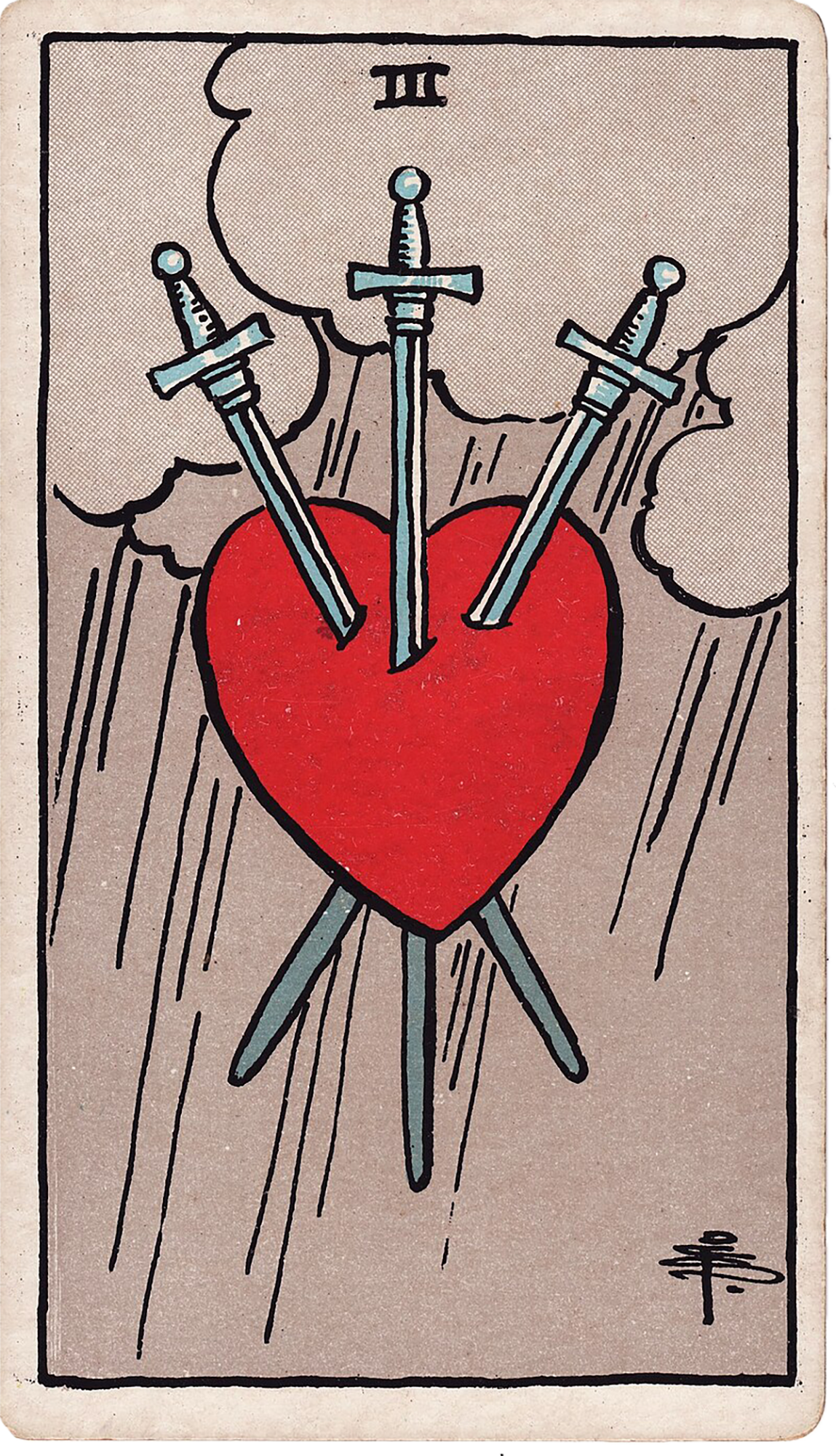 3 of Swords
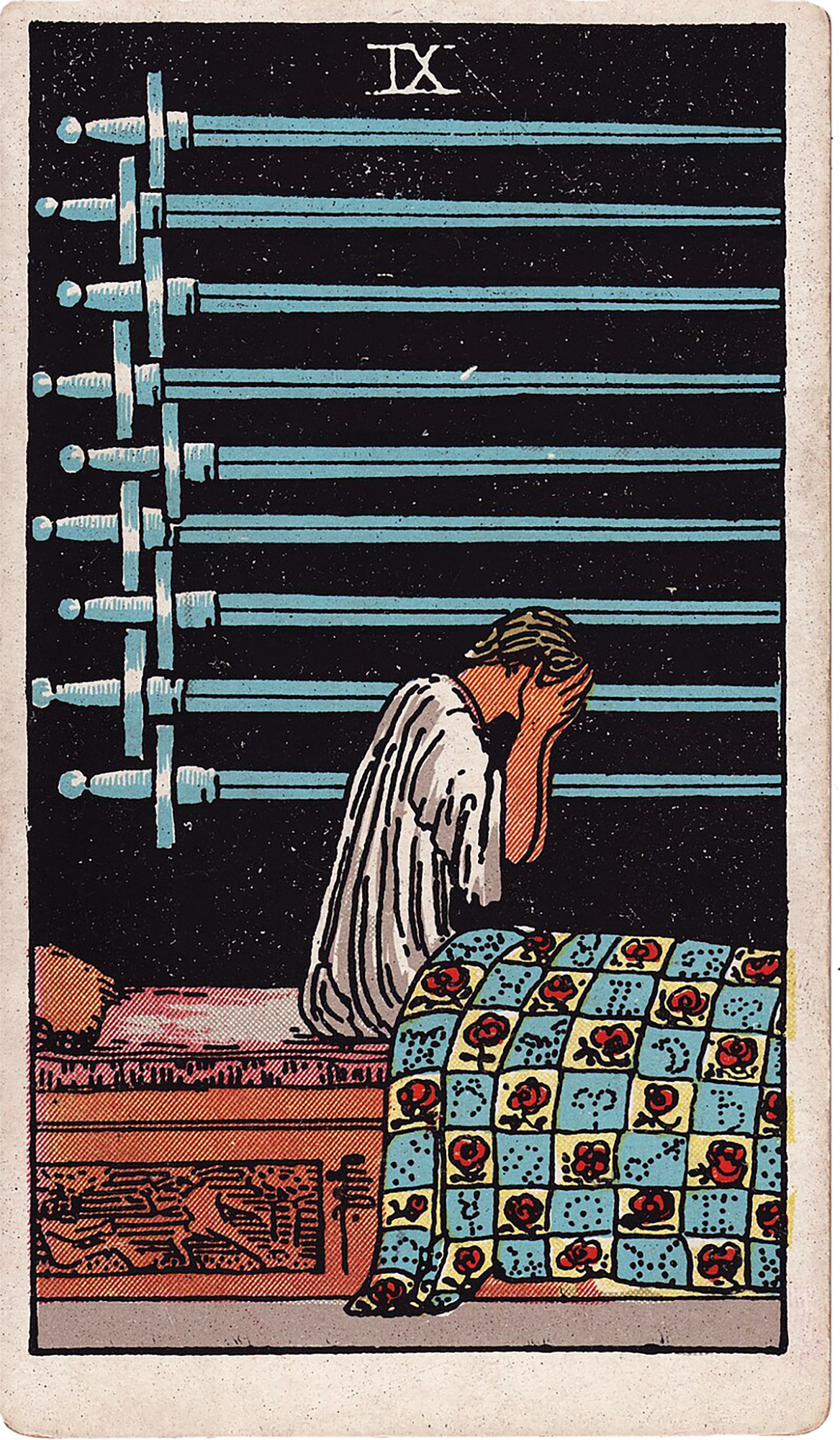 9 of Swords
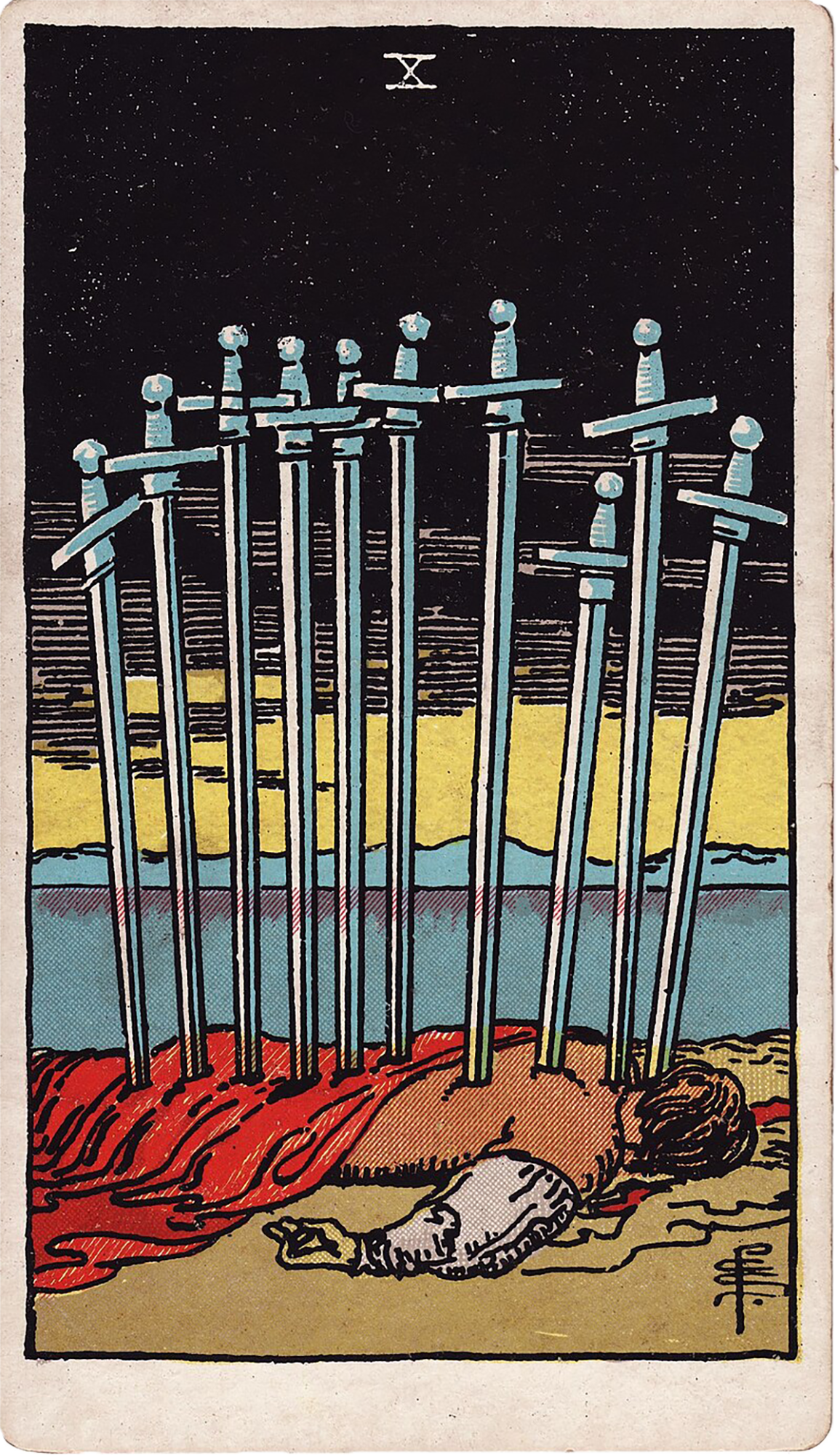 10 of Swords
Introduction: Why study wound symbols in the Swords suit
The Swords suit traditionally governs the mental realm: thought, speech, conflict, judgment, and the consequences of belief and communication. When a Tarot reading touches family patterns—roles, secrets, cycles of blame, avoidance, or repetitive arguments—the Swords cards often appear as wound markers. They do not merely indicate pain for drama; they map how pain is experienced, processed, expressed, and sometimes resolved. This article uses three supplied cards—the 3 of Swords, 9 of Swords, and 10 of Swords—to show how pain moves through naming, amplification, and endings in family settings. Each card will be studied visually and practically, using Rider‑Waite symbolism where it clarifies the reading.
Core concept: naming, amplifying, ending
A useful triad for reading family wounds with Swords is: naming, amplifying, ending. These three stages often arrive in one reading or over successive readings. The 3 of Swords often signals naming: grief that is visible enough to be named. The 9 of Swords highlights amplification: the mind running the scenario again and again, particularly at vulnerable hours. The 10 of Swords marks limits and endings: a painful cycle hit its limit and collapse or surrender emerges, but the Rider‑Waite sunrise suggests recovery begins once an ending is acknowledged. Using this triad keeps the reader from confusing raw emotional intensity with where the process actually is: is the family only naming the wound, stuck in worrying loops, or finally at closure (healthy or avoidant)?
Reading the imagery: how Rider‑Waite symbols guide interpretation
When you look at these three cards, anchor interpretations in their RWS visuals. 3 of Swords: a heart pierced by three swords against storm clouds and rain. Visually, it names heartbreak—there is a central organ (relationship, family bond) wounded by sharp separations. In family context the pierced heart is often a spoken truth, betrayal, or the explicit acknowledgment of loss. The rain and storm indicate pain that clears the air; it is public, declarative, and hard to minimize. 9 of Swords: a figure sits upright in bed, hands to face, nine swords mounted on the wall behind. The bedroom implies private fear—nighttime thoughts, shame, nightmares. In family readings this card often points to secret anxieties, internalized guilt, or worry that family members do not see. The swords on the wall can show an atmosphere of critique or inherited mental habits. 10 of Swords: a body lies face‑down with ten swords in the back, but the horizon shows a pale dawn. This dramatic scene often marks a terminal point—an ending so absolute that recovery begins only after acceptance. Within family symbolism this card can indicate a family role or pattern that has finally been exhausted, a collapse of a dynamic, or a necessary termination (relationship, job, expectation) that must be mourned before rebuilding.
Card‑by‑card: upright and reversed applied to family wounds
3 of Swords upright: In family readings this card highlights a pain that is clear enough to name: an admission, a betrayal, a divorce, an exposed secret, or a blunt truth about parenting. It asks for practical responses—communication, reparation, boundary setting—that fit the present stage rather than abstract ideals. Use surrounding cards to determine whether the naming is new, deepening, or beginning to resolve. 3 of Swords reversed: The reversal points to suppressed grief, recurring pain that hasn’t been acknowledged, or forgiveness that feels premature. In family terms, it often shows where people are minimizing hurt to keep peace, or where a lesson is known intellectually but not integrated emotionally. Instead of assuming 'no pain,' explore what’s been left unspoken and what needs to be acknowledged before repair can start. 9 of Swords upright: This card emphasizes the mind amplifying fear—late‑night worry about what family members will think, internalized shame passed down between generations, or catastrophizing about conflicts. The recommended response is careful evidence and support rather than accepting the mind’s automatic worst‑case stories. In family work, ask who has modeled catastrophic thinking and how past narratives fuel current anxiety. 9 of Swords reversed: The reversal can indicate relief beginning, or stubborn persistent anxiety that’s been hidden. It can show that the worry is internal and not visible to others; it calls for speaking the anxiety and seeking practical help or reassurance. 10 of Swords upright: This card signals that a painful cycle has reached a limit—an unsustainable pattern in the family is ending. The dawn suggests that recovery is possible, but only after acceptance. For readers, this is a cue to help querents mark the ending with rituals, grief work, and concrete steps toward safety and rebuilding. 10 of Swords reversed: The reversal draws attention to surviving crisis, resisting an ending, or repeated collapses. In family contexts it can show denial of the need to close a harmful pattern, or the first stirrings of recovery that must be supported practically and psychologically.
Technique: how to read these cards together in family spreads
Method 1 — Three‑stage spread (Naming, Mindset, Ending). Place three cards in a row labelled: What needs to be named? What is the mind doing with this? What is reaching its limit? When you have 3, 9, and 10 of Swords among these positions, anchor each to the triad: 3 for naming, 9 for amplification, 10 for endings. Ask follow‑up questions: If 3 of Swords is in naming, who needs to hear this truth and what form should the communication take? If 9 of Swords is in mindset, what evidence contradicts the worst fears and who can offer support? If 10 of Swords is in ending, what practical closures are required (legal, financial, relational)? Method 2 — Family role mapping. Use each card to map people or roles. 3 of Swords can represent the family member whose truth incites pain, or the role of the grieved one. 9 of Swords can represent the worrier, the private sufferer, or the inherited anxious narrative. 10 of Swords can stand for the pattern that must end (e.g., scapegoating, enabling). Method 3 — Timeline reading. Place the 3, 9, and 10 across past, present, future to see progression: Has a hurt been named in the past (3), is anxiety now amplifying it (9), and will an ending be necessary later (10)? Always read reversals not simply as 'good' or 'bad' but as process notes: too much, too little, or stuck energy.
Examples: sample family readings and interpretations
Example A — Three‑card reading (past/present/future) with the supplied cards present. Suppose the querent reports repeated heated arguments about caregiving. Past: 3 of Swords upright. Interpretation: A clear hurt was named in the past—perhaps a sibling announced they could not take responsibility, or a truth about parental neglect came out. Present: 9 of Swords upright. Interpretation: The querent is lying awake worrying about being judged or abandoned, replaying the argument and imagining worst outcomes. Future: 10 of Swords upright. Interpretation: The pattern is likely to reach a limit unless something changes. This suggests planning for an ending (reassigning responsibilities, creating boundaries) while providing grief space. Example B — Role mapping. Querent draws 9 of Swords reversed in the position 'hidden dynamics.' Interpretation: There is relief hidden under the surface; someone has begun to speak the worry but the family still doesn't see it. Paired with 3 of Swords reversed in 'what needs attention,' the reading shows suppressed grief that needs naming before the 9's relief is stable. Example C — Counseling application. In a therapeutic context a 3 upright, 9 upright, and 10 reversed can summarize a case: grief has been named (3), anxiety is active (9), but the repeated collapses are still being resisted (10 reversed). The therapist’s task is to help the client move from intellectual acceptance to embodied change: small consistent practices, communication scripts, and boundary experiments.
Practical reading method: step‑by‑step for learners
1) Start with the image. Before consulting meanings, describe what you see in each card aloud or in your notes: colors, objects, body language, horizon. For these cards pay attention to the heart in the 3, the bed and posture in the 9, the dawn and the ten swords in the 10. 2) Place cards in a clear spread aligned to a family question: roles, timeline, or needs. 3) Read suit logic next: remind yourself Swords = thought and speech. Ask: what thoughts or communications are active here? 4) Use the upright/reversed prompt from the supplied contexts as a process indicator: Does the reversal suggest suppressed grief, relief, or resistance? Explore what is stuck. 5) Cross‑check with context cards: always use neighboring cards to see whether the energy is resolving or entrenching. For instance, a resolving court card or Cups could soften Swords pain; other Swords may show escalation of mental patterning. 6) Translate into action steps: Swords are practical. Translate an abstract insight into a concrete task—scripting a conversation, naming a boundary, requesting family therapy, or creating a ritual marking an ending. 7) Close with containment: these cards can stir strong emotion. Offer brief grounding or a follow‑up plan for the querent to avoid leaving them in heightened distress.
Common mistakes and how to avoid them
Mistake 1: Treating reversed as automatically 'good.' Reversals in these cards typically signal stuck processes, suppression, or beginning recovery—not a simple inversion. Always ask what stage is blocked. Mistake 2: Pathologizing family members. Do not reduce a person to a card. Use cards to describe dynamics and invite responsibility, not to label someone as 'the villain' permanently. Mistake 3: Reading the image as fate. These Swords cards highlight processes and skills to apply, not deterministic prophecy. Use their practicality: what communication skill, decision, or boundary will change the pattern? Mistake 4: Missing the small step. With Swords the impulse is to 'fix it' intellectually. Family wounds often heal through small consistent actions—clear sentences, listener roles, gradual boundary enforcement—not one grand speech. Mistake 5: Ignoring ritual and grief. Especially with the 10 of Swords, there’s a tendency to either glorify collapse or rush recovery. Provide space for ritualized closing and practical steps for rebuilding security.
Healing interventions and rituals tied to these cards
Work with 3 of Swords: practices that name grief safely. Journal prompts that ask 'What must be told and to whom?' Communication scripts that begin with 'I felt...' rather than accusations. Short family exercises: a time‑boxed 'truth round' in which each member states one hurt and one need. Work with 9 of Swords: anxiety management and testimony. Nighttime grounding routines, worry lists (externalize fears onto paper), and structured sharing in therapy where worries are fact‑checked and validated. Encourage the querent to find an external witness (therapist, close friend) to reduce internal isolation. Work with 10 of Swords: endings and recoveries. Rituals for closure (writing and burning a symbol of the pattern, a memorial for what’s ending), plus practical planning for the immediate post‑ending period (safety plan, financial steps, custody arrangements). Use the visual dawn as a metaphor for a staged reentry into new routines: set a 30‑60‑90 day plan for small rebuilding steps.
Putting it together in family readings
When these three Swords cards appear in a family spread, treat them as a map rather than a verdict. Ask sequential questions: Which hurt needs public naming and reparation (3)? Where is the family mind amplifying that hurt and creating additional suffering (9)? Which pattern has reached a point where closure or radical change is necessary (10)? Use role mapping to assign tasks: who will name the hurt, who will hold the anxious person in a nonjudgmental way, who will manage the logistics of an ending. Always include agreements about containment—how conversations will be paused if they escalate, when to bring in a third party, and how to honor grief. In many cases a successful intervention is small and procedural: a scripted meeting, clear boundaries, accountability partners, and follow‑up counseling.
Conclusion: from sharp insight to steady repair
3, 9, and 10 of Swords collectively show a movement from named hurt to mentally amplified distress and finally to an ending that, when accepted, allows recovery. In family symbolism studies this triad is powerful because it ties imagery to specific social dynamics—public wounds, private anxieties, and exhausted patterns. For learners, the strongest readings come from careful attention to the Rider‑Waite images, translating Swords language into practical steps of communication, evidence, and boundary work, and treating reversals as process indicators rather than simple opposites. The cards ask for concrete responses: say the truth that needs saying, bring fear into the open and test it, and create rituals and plans to close what no longer serves. Reading these cards well supports families to move from pain that repeats to pain that finishes—and then to the slow work of rebuilding.
Practice questions
• When you look at the 3 of Swords image, what specific family truth or loss does it most readily name for you?
• How does the posture and private setting of the 9 of Swords reflect the way your family handles worry or shame?
• What patterns in your family feel like the 10 of Swords—a repeated collapse or a necessary ending—and what practical first step would make the ending safer?
• In a recent family conflict, which of the three stages (naming, amplification, ending) was most active, and what small action could shift the dynamic?
• When one of these cards appears reversed, how might the family be minimizing, clinging, or beginning to recover?
Comments
Sign in to comment.
Continue learning
Interpreting the Dance of Justice and The Devil: Balancing Morality and Temptation in Tarot Readings
The combination of Justice and The Devil in tarot presents a profound exploration of morality, temptation, and personal accountability. This article unpacks how these cards influen...
Understanding The World Card in Personal Completion and New Cycles
The World card in tarot signifies completion, integration of lessons learned, and the threshold of new cycles. This article explores its nuanced meanings in upright and reversed po...
Mastering Tarot Timing Techniques for Accurate Readings
Timing in tarot readings can transform vague predictions into clear guidance about when events might unfold. This article explores practical timing techniques for beginners and adv...
Unlocking the Power Balance of The Emperor The Hierophant and Justice in Tarot Combinations
This article offers a deep exploration of the combined meanings of The Emperor, The Hierophant, and Justice cards within tarot spreads, focusing on how their energies interact to p...
Unlocking Leadership Qualities Through the Knight Queen and King of Wands
The Knight, Queen, and King of Wands embody evolving leadership qualities within the family suit of Wands. This article unpacks their traditional symbolism and the lessons each cou...
Mastering the Art of Combining The Magician The Empress and Ace of Pentacles for Manifestation and Abundance
This article offers a comprehensive exploration of how to skillfully combine The Magician, The Empress, and Ace of Pentacles tarot cards to enhance manifestation and attract abunda...
Mastering Intuitive Tarot Reading with The High Priestess The Hermit and The Moon for Deeper Insights
This article guides Tarot readers through mastering intuitive reading skills using three powerful cards: The High Priestess, The Hermit, and The Moon. It covers both beginner and a...
Unlocking Leadership and Responsibility Lessons Through the Court Cards of Swords
This article delves into the Court Cards of Swords—the Page, Knight, Queen, and King—to uncover the nuanced lessons they provide about leadership and responsibility. Rooted in the...
Exploring the Symbolic Language and Elemental Correspondences of the Court Cards of Cups for Emotional and Intuitive Insight
This in-depth article examines the Court Cards of Cups within the Rider-Waite-Smith tradition and the VoxFati Tarot Library context. It explores their rich symbolism and elemental...
Interpreting the Page of Swords for Career Love and Personal Growth
This article teaches how to read the supplied Page of Swords single-card draw across multiple life contexts. Using the card's Rider-Waite-Smith imagery and the provided upright and...