
When Did Tarot Reversals Start and Why Readers Use Them
This article traces the emergence of reversed tarot meanings, explains why many readers use reversals today, and gives concrete, image-anchored techniques for interpreting reversed cards. Throughout, the Rider-Waite-Smith image of The Hanged Man is used as a recurring example so you can see how reversal theory is applied to a single, visually rich card.
Cards explored in this article
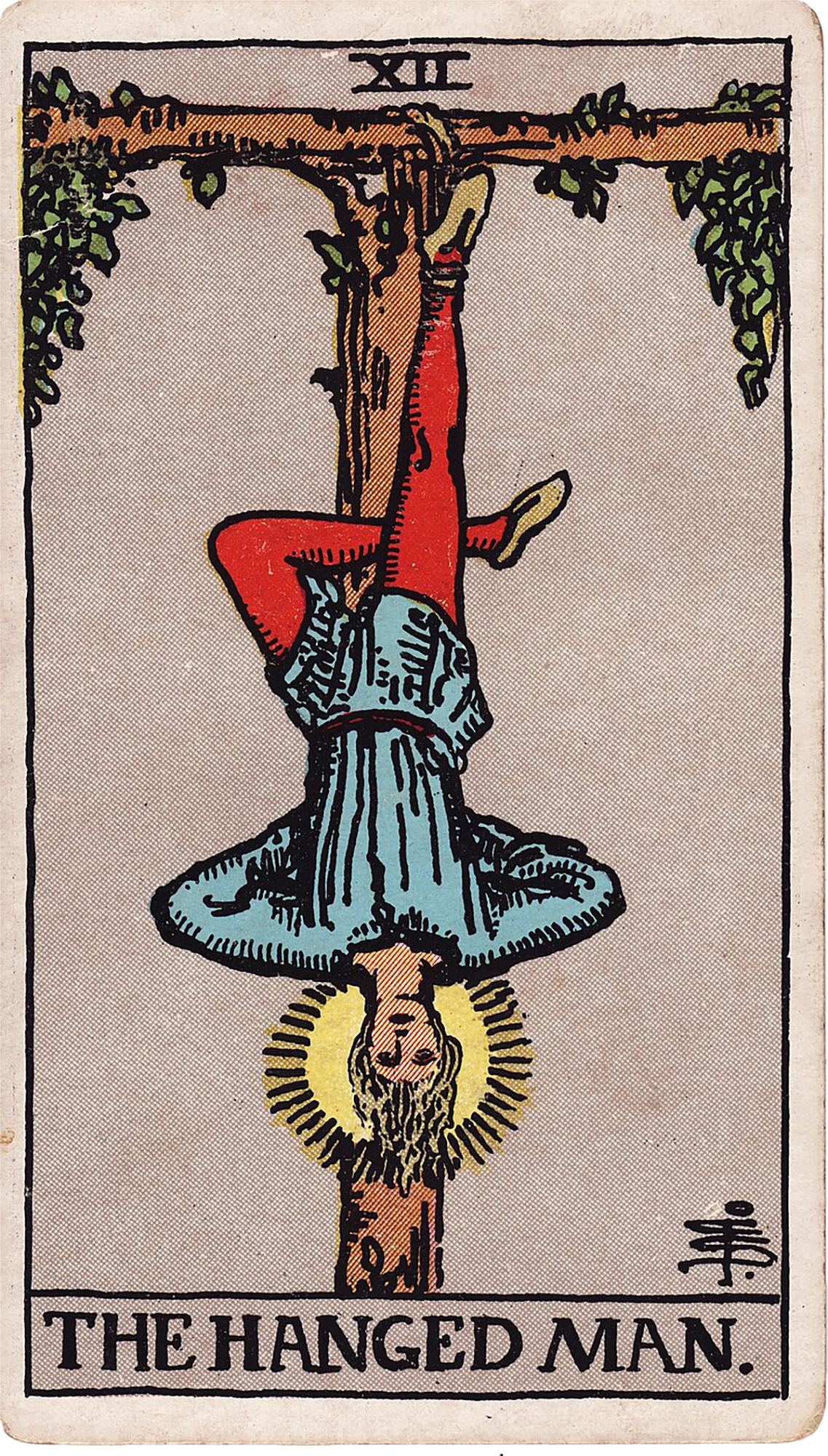 The Hanged Man
Introduction: What a Reversal Is and Why It Matters
A reversed card is simply a card that appears upside down relative to the reader. Readers treat reversals in several ways: as simple polarity (opposite meanings), as nuances (blocked, delayed, internalized), or as emphatic signals (strengthened energy, caution). Whether you use reversals at all is a methodological choice, not a requirement of tarot. This article looks at when reversals began to appear in practice, how they developed into established techniques, and how to read them with a focus on the Rider-Waite-Smith image of The Hanged Man. All examples are teaching tools for learners, not guaranteed predictions.
A Brief History of Reversals
Reversals are not in the oldest known tarot manuals that focused mainly on allegory and gameplay. As tarot evolved from a card game to an esoteric tool in the 18th and 19th centuries, readers began to experiment with new layers of meaning. The first widely distributed occult systems concentrated on upright symbolism and correspondences. Reversal usage appears more often in the late 19th and early 20th centuries as occultists and occult publishers sought ways to expand interpretive nuance. By mid-20th century, with the spread of printed decks and instruction books, reversals were a regular optional technique in many schools. Important to stress: there was never a single 'origin date' — reversals entered practice gradually and unevenly depending on cultural context, readership, and teaching lineage.
Why Reversals Became Popular
Several practical needs drove adoption. Readers wanted more layers: reversals multiply interpretive possibilities without needing additional cards. Reversals also offered a way to mark inner psychological dynamics (blocked energy, resistance) versus outer events. In a Tarot culture increasingly influenced by psychotherapy and introspective methods during the 20th century, reversals provided language for internal states. Additionally, the visual cue of an upside-down card is memorable and forces the reader to pause and consider polarity or nuance — which is useful in a practice that values deliberate reflection.
Interpretive Logic: Opposite, Nuance, Emphasis
Most teachers describe three basic frameworks for reversals: - Opposite: reversal indicates a near-antonym (e.g., where upright is engagement, reversed is disengagement). This is simple and easy to learn but can be too blunt. - Nuance or blockage: reversal signals the upright energy is present but blocked, delayed, internal, exaggerated, or misapplied. This is subtler and aligns well with psychological readings. - Emphasis or intensification: some readers treat a reversed card as an emphasized or intensified form of its upright meaning, or as an 'urgent' signal. Less common, but used by those who avoid opposites. All three frameworks have strengths. The nuance approach is the most flexible for complex readings because it lets you hold the upright meaning as a reference and then ask how that energy might be skewed. That approach pairs well with the Rider-Waite-Smith visuals, where symbolic elements are rich enough to suggest degrees and directions of energy.
Anchoring Theory to Image: The Hanged Man Upright
Use the supplied Rider-Waite-Smith-inspired description of The Hanged Man upright to anchor practical interpretation. The Hanged Man’s image — a figure suspended by one foot, a serene face, a radiant halo, and the tree-like support — visually encodes pause, voluntary surrender, perspective shift, and inner illumination. Upright, this card encourages deliberate pausing, releasing control, and allowing a different perspective to transform understanding. For learners: when you see The Hanged Man upright, identify visible cues (the halo, the inverted pose, the lack of struggle) and connect them to questions you can ask the querent: Where might a deliberate pause be useful? What perspective are you resisting? What small, proportionate action is available now?
Anchoring Theory to Image: The Hanged Man Reversed
The supplied reversed description gives the standard nuance-based readings: stagnation, martyrdom, pointless delay, resistance to surrender, or waiting without learning. Visually, when you imagine the same Hanged Man upside down relative to the reader’s orientation, the serenity can look like stubbornness; the halo may instead highlight obsession or self-righteousness; the posture can seem entrapped rather than chosen. Use the inversion as a prompt: is the querent stuck in a pausing posture without insight? Are they clinging to sacrifice as proof of worth? Is surrender being performed as a virtue-signalling stance rather than as a generative release? Always check neighboring cards in the spread to determine whether reversal indicates resistance (psychological) or a corrective phase (recovery in progress).
Practical Reading Method: How to Work with Reversals
1) Decide before the reading whether you will use reversals and which logic you’ll apply (opposite, nuance, emphasis). Consistency helps both you and the querent. 2) When a reversed card appears, pause and first name the upright meaning aloud or in notes. Treat the upright meaning as the anchor. 3) Ask what modification the reversal suggests: Is the energy blocked, internalized, exaggerated, delayed, or inverted into its opposite? Use the supplied Hanged Man upright text as a direct reference: does the card now indicate 'pausing as avoidance' rather than 'pausing as clarity'? 4) Use image interrogation: point to elements — the halo, the posture, the rope/tree — and ask how those symbols would read when the card's orientation is inverted. 5) Look to position: in a timeline spread, does reversal indicate delay? In a motivation position, does it indicate hidden resistance? 6) Check for narrative coherence: if other cards suggest movement, a reversed Hanged Man might be a temporary, internal pause. If other cards suggest confusion or stagnation, the reversal is more likely to indicate true blockage. 7) Offer practical, proportionate advice. For a reversed Hanged Man you might suggest concrete actions like naming what’s being avoided, testing a small boundary, or practicing a deliberate form of surrender — not mystical quick fixes.
Examples and Mini-Readings with The Hanged Man
Example A — Career timeline spread: Hanged Man upright in 'present' position. Interpretation: a deliberate pause, useful reframing; advise intentional information-gathering and small experimental moves. Example B — Relationship querent: Hanged Man reversed in 'advice' position. Interpretation: you may be staying in a sacrificial posture, expecting reward for suffering; practical advice: examine whether you are avoiding direct communication and try a brief, honest boundary. Example C — Inner work context: Hanged Man upright as 'obstacle' means the obstacle is a failure to see the situation anew; reversed means the person is aware but not changing — a correctable pattern. In each example, anchor your language to the supplied upright and reversed descriptions so the querent can visualize how the image supports the reading.
Common Mistakes and How to Avoid Them
Mistake 1: Treating reversals as automatically 'bad'. Avoid moralizing; reversed often points to nuance. Mistake 2: Leaning only on opposites without image work. Use the card imagery (halo, suspension) to find subtlety. Mistake 3: Overloading the querent with too many reversed cards interpreted as a single doom narrative. Prioritize narrative coherence and offer next steps. Mistake 4: Inconsistent system. If you switch between opposite and nuance frameworks mid-reading, you will confuse yourself and the querent. State your method clearly at the beginning. Mistake 5: Forgetting that reading is dialogic. If a reversed Hanged Man raises questions, ask the querent for their experience before assigning psychological motives.
Teaching Tips and Ethical Considerations
When teaching reversals, emphasize choice and consent. Let students practice with a declared method, then try others to see what yields the clearest communication. Encourage journaling to see how reversed readings play out over time. Ethically, avoid using reversals to induce fear or present them as deterministic. With The Hanged Man in particular, always offer agency-based guidance: whether upright or reversed, the card is about perspective and choice — even if that choice is to accept a difficult pause. Reversals should increase clarity, not confusion.
Conclusion: Reversals as a Deliberate Tool
Reversals are a historical accretion rather than a single invention. They became common as readers sought more nuance and psychological language, especially in modern occult and therapeutic contexts. The best use of reversals is deliberate: choose a framework, anchor interpretations in imagery, and treat the upright meaning as your baseline. The Rider-Waite-Smith Hanged Man demonstrates how rich imagery supports both upright and reversed readings: upright invites considered pause and perspective-shift, reversed warns of stagnation, martyrdom, or incomplete transformation. Use reversals to deepen inquiry, not to compile judgments.
Practice questions
• How does the image of The Hanged Man change for you when you imagine it inverted? What emotional words arise?
• Before you decide to use reversals, which interpretive framework (opposite, nuance, emphasis) feels most honest to your practice and why?
• When a reversal appears, what three clarifying questions can you ask a querent to move from description to practical guidance?
• Can you recall a reading where a pause (upright Hanged Man) was helpful and compare it to a time when pausing became avoidance (reversed Hanged Man)? What differentiated them?
• How will you communicate to a querent that a reversed card indicates internal resistance rather than an inevitable outcome?
Comments
Sign in to comment.
Continue learning
Interpreting the Dance of Justice and The Devil: Balancing Morality and Temptation in Tarot Readings
The combination of Justice and The Devil in tarot presents a profound exploration of morality, temptation, and personal accountability. This article unpacks how these cards influen...
Understanding The World Card in Personal Completion and New Cycles
The World card in tarot signifies completion, integration of lessons learned, and the threshold of new cycles. This article explores its nuanced meanings in upright and reversed po...
Mastering Tarot Timing Techniques for Accurate Readings
Timing in tarot readings can transform vague predictions into clear guidance about when events might unfold. This article explores practical timing techniques for beginners and adv...
Unlocking the Power Balance of The Emperor The Hierophant and Justice in Tarot Combinations
This article offers a deep exploration of the combined meanings of The Emperor, The Hierophant, and Justice cards within tarot spreads, focusing on how their energies interact to p...
Unlocking Leadership Qualities Through the Knight Queen and King of Wands
The Knight, Queen, and King of Wands embody evolving leadership qualities within the family suit of Wands. This article unpacks their traditional symbolism and the lessons each cou...
Mastering the Art of Combining The Magician The Empress and Ace of Pentacles for Manifestation and Abundance
This article offers a comprehensive exploration of how to skillfully combine The Magician, The Empress, and Ace of Pentacles tarot cards to enhance manifestation and attract abunda...
Mastering Intuitive Tarot Reading with The High Priestess The Hermit and The Moon for Deeper Insights
This article guides Tarot readers through mastering intuitive reading skills using three powerful cards: The High Priestess, The Hermit, and The Moon. It covers both beginner and a...
Unlocking Leadership and Responsibility Lessons Through the Court Cards of Swords
This article delves into the Court Cards of Swords—the Page, Knight, Queen, and King—to uncover the nuanced lessons they provide about leadership and responsibility. Rooted in the...
Exploring the Symbolic Language and Elemental Correspondences of the Court Cards of Cups for Emotional and Intuitive Insight
This in-depth article examines the Court Cards of Cups within the Rider-Waite-Smith tradition and the VoxFati Tarot Library context. It explores their rich symbolism and elemental...
Interpreting the Page of Swords for Career Love and Personal Growth
This article teaches how to read the supplied Page of Swords single-card draw across multiple life contexts. Using the card's Rider-Waite-Smith imagery and the provided upright and...