
Reading Roads Paths and Bridges in Tarot Imagery
This article teaches how to read movement, thresholds, and transitions in Tarot by focusing on roads, paths, and bridges as visual and symbolic motifs. Using the supplied cards — The Fool, 8 of Cups, and 6 of Swords — the piece links Rider‑Waite‑Smith imagery to practical reading technique. You will learn how to identify initiations, departures, crossings, and emotional or mental baggage; how to combine Major Arcana archetype with suit meanings (Cups and Swords); how to use directionality, companions, conveyances, and landscape details as active interpretive clues; plus step‑by‑step exercises, sample mini‑spreads, and common mistakes to avoid.
Cards explored in this article
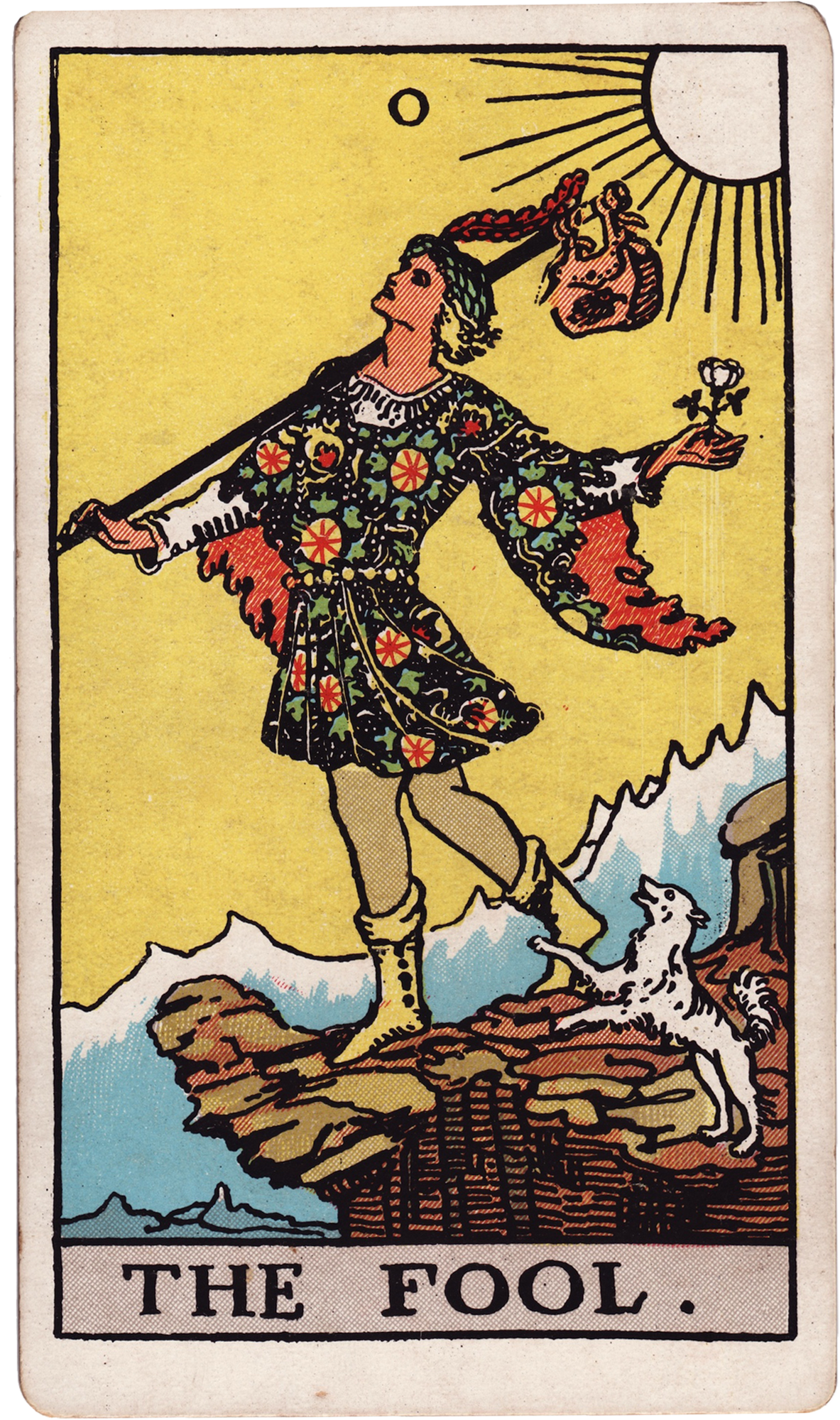 The Fool
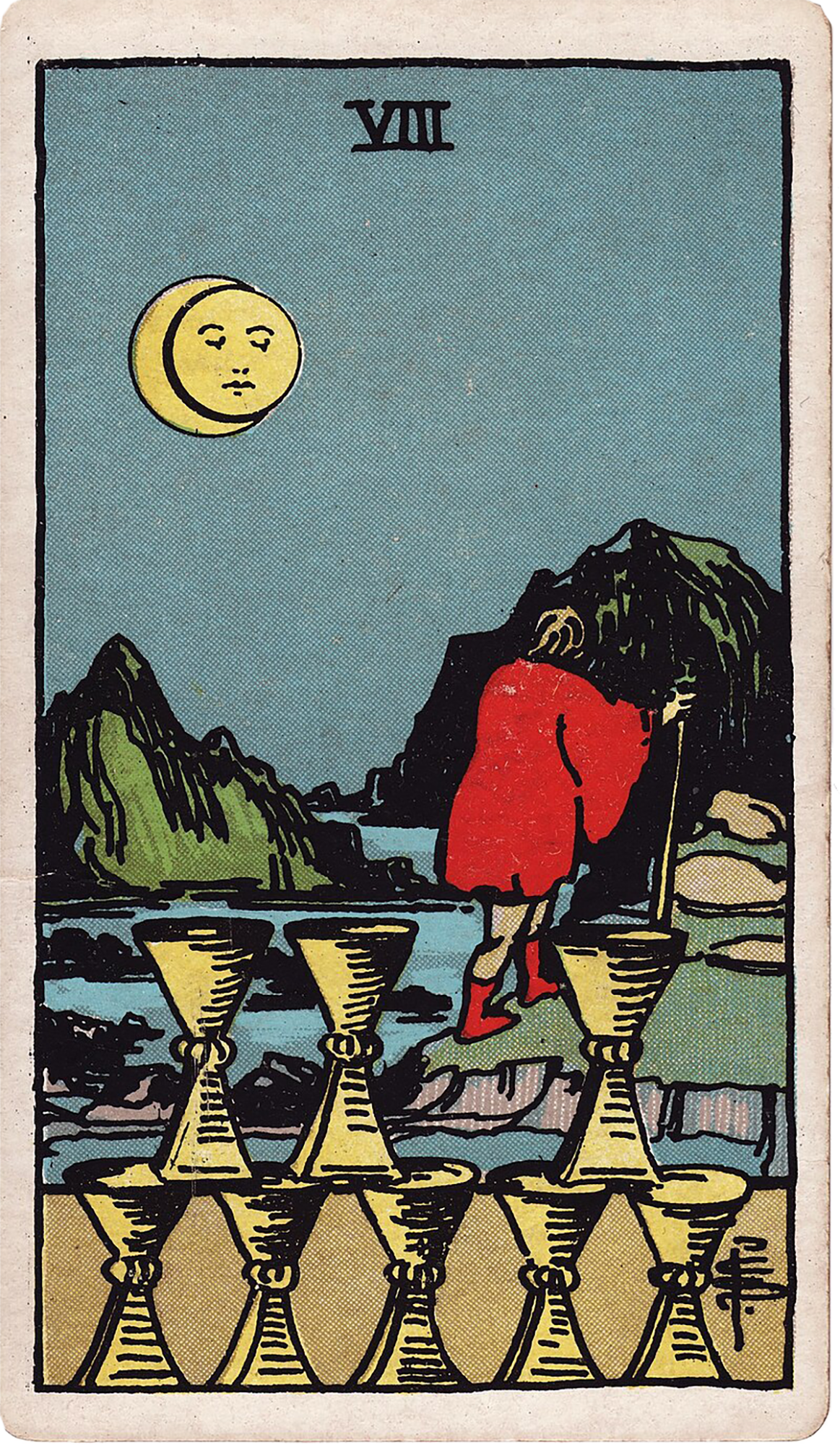 8 of Cups
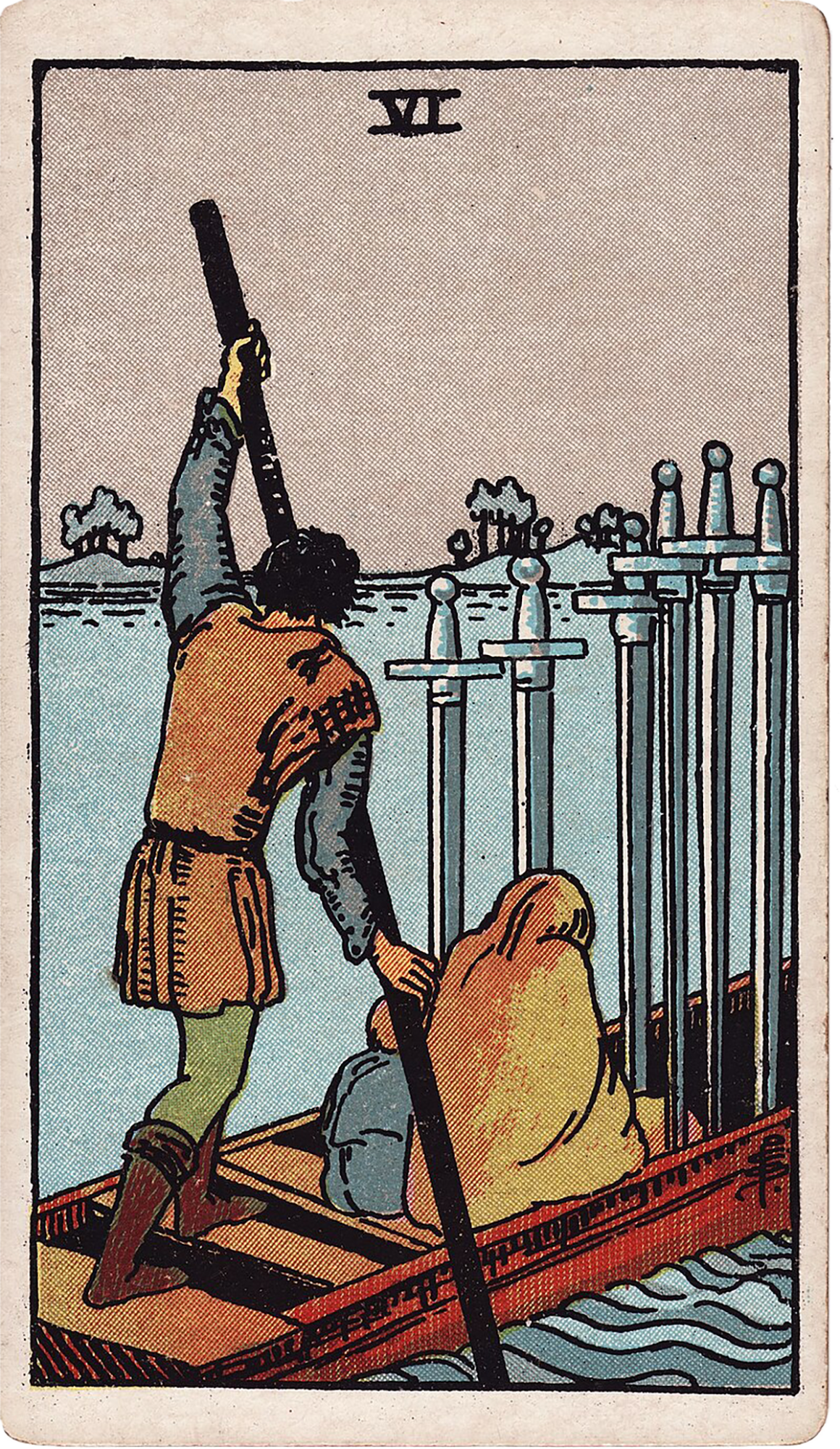 6 of Swords
Introduction: Why roads, paths and bridges matter in Tarot
Paths, roads, and bridges are not neutral scenery in Tarot images; they are a language of movement. They tell us where a figure begins and where they might go, whether the move is voluntary or forced, whether the crossing is temporary or irrevocable. Reading these features trains you to track process, not just outcome. In this study we anchor every claim to three supplied cards—The Fool, 8 of Cups, and 6 of Swords—and use Rider‑Waite‑Smith visual vocabulary to build a reproducible method. The Fool represents initiation and archetypal beginnings. The 8 of Cups represents an emotional withdrawal or seeking. The 6 of Swords represents transit—leaving turbulent waters for calmer shores. Together they form a coherent lesson about starting, leaving, and crossing.
Core visual signs: what to look for on the card
When you look at a card to read movement, consistently scan the image for these elements and treat each as an active symbol: 1) Directionality: Which way is the figure facing? Facing away often indicates an inward or private movement; facing toward the viewer suggests action that will be visible. 2) Point of departure and destination: Is the figure leaving a visible scene (a cliff, a cluster of cups, choppy water)? Is a destination shown (distant mountains, calmer shore), or is the horizon open? 3) Conveyance: Walk, boat, horse, cliff step—each conveyance carries meaning. The Fool’s near‑cliff and foot forward invites the notion of a first step or leap. The 6 of Swords’ small boat is a literal crossing—ferries, bridges, and boats are procedural or assisted transitions. 4) Companions: Animals, other people, or children indicate relationships or interior resources. The Fool’s small dog suggests instinct, companionship, or a nagging voice. In 6 of Swords the seated figures imply accompaniment and guardianship during transit. 5) Baggage and objects: Bundles, swords, cups, sacks represent what the querent takes or leaves. In 6 of Swords the swords standing in the boat act as visible mental items transported across. In 8 of Cups the stacked cups left behind show what remains unvalued. 6) Landscape and weather: Mountains, moon, sun, rough versus calm water mark the journey’s tone—hopeful ascent, liminal night, or gradual calm.
Rider‑Waite‑Smith anchors for the three supplied cards
To use imagery reliably, you must know the classic RWS cues on each of the three cards we are using. Refer to these as the baseline. The Fool (Major Arcana): The figure stands on the edge of a precipice with one foot lifted, a small dog at his heels, a knapsack on a stick, a white rose in hand, and the sun shining above. RWS reads this as initiation, purity of purpose, curiosity, potential risk, and a capacity to move before all facts are known. Upright highlights starting with openness; reversed points to impulsiveness, avoidance, or blocked beginning. 8 of Cups (Cups suit): A cloaked figure walks away from a neat stack of eight cups, toward a moonlit range of mountains. The cups are placed deliberately in the foreground, and the figure’s back is turned—this is departure from emotional investments toward deeper meaning. Upright emphasizes leaving to seek more authentic fulfillment; reversed points to fear of leaving, returning, or drifting. 6 of Swords (Swords suit): A small boat carries a cloaked adult and a child (or smaller figure), a standing row of six swords behind them. The water is rough behind and calmer ahead; a ferryman guides them toward distant land. RWS reads this as moving away from difficulty, a transition that may still carry sadness, and cognitive processing on the way to resolution. Upright shows necessary transition; reversed shows difficulty moving forward or unresolved carryover.
How to read initiation, departure and crossing as a mini narrative
When these cards appear together, or when an image contains a clear path/bridge motif, construct a narrative in three verbs: Begin, Leave, Cross. Use the supplied imagery to assign these verbs. Example sequence logic: The Fool = Begin. The 8 of Cups = Leave. The 6 of Swords = Cross. Stepwise approach: 1) Identify who initiates: The Fool’s posture and knapsack suggest the querent or a nascent impulse is the agent. 2) Notice why they leave: In 8 of Cups the cups remain in the foreground, telling you the emotional reason. Ask whether what is being left is a relationship, a role, or emotional habit. 3) Inspect how they cross: 6 of Swords tells you about the transport—are they moving with assistance? Is the movement strategic or reluctant? The swords in the boat tell you what intellectual patterns accompany the crossing. Assemble these into a verb‑driven sentence that is specific to the querent’s situation rather than a bland summary.
Interpretation logic: mixing Major Arcana with suit energies
Interpretation involves weighting two different kinds of meaning: the Major Arcana's archetypal theme (The Fool) and the suit’s practical modalities (Cups = emotion; Swords = thought/communication). The Fool’s archetypal beginning gives permission for initiation: it licenses a new chapter, but it does not guarantee ease. If The Fool appears with 8 of Cups, the reading frames the departure in spiritual or existential terms: a new beginning follows an emotional leave. If The Fool appears with 6 of Swords, the beginning is oriented toward intellectual reorientation or a practical crossing. When you synthesize, let the Major Arcana name the existential tone and let the suit indicate how that tone will be enacted: feelings (Cups) or thinking/communication (Swords). Keep the card positions in mind (past/present/future, situation/obstacle/advice) to determine whether initiation (The Fool) is a cause, a present action, or a yet‑to‑come plan.
Practical reading method: a step‑by‑step technique you can use
Use this repeatable method when any path/road/bridge motif appears or when your spread contains The Fool, 8 of Cups, or 6 of Swords. Step 1 — Slow observation: Look at the card for 60 seconds without naming. Notice direction, companions, conveyance, and landscape. Step 2 — Anchor to suit/arcana: Say aloud (or jot) the basic RWS core: The Fool = starting; 8 of Cups = leaving for meaning; 6 of Swords = transit away from turbulence. Step 3 — Ask movement questions: Who initiates? What is being left? What is being carried? Is the destination shown? Step 4 — Locate agency and restraint: Who helps (6 of Swords ferryman, Fool's dog) or resists (reversed positions, obstacles in the path)? Step 5 — Map verbs and objects: Turn images into a simple clause: 'I step away from X toward Y, carrying Z.' Use the cards to fill X (8 of Cups’ cups), Y (6 of Swords’ distant shore or The Fool's sunlit horizon), Z (swords in boat or Fool's knapsack). Step 6 — Check reversals: If any card is reversed, reinterpret as resistance, internalization, delay, or exaggerated expression. For example, reversed 8 of Cups may show fear of leaving; reversed 6 of Swords may show unresolved baggage preventing a true crossing; reversed Fool may show reckless starts or stalled beginnings. Step 7 — Propose an action: Translate the reading into one or two practical next steps—clear boundary, deliberate small step, ask for assistance, or inventory what must be unloaded.
Three practical spreads built on roads and bridges
1) The Crossing Spread (three cards): Position A = Why I'm leaving (8 of Cups), Position B = How I begin (The Fool), Position C = How I cross (6 of Swords). Read as cause → initiative → transit. Example: If 8 of Cups upright shows you are leaving because emotional meaning is lacking, The Fool upright encourages a curious, proportionate first step, and 6 of Swords upright suggests using help or a planned move to get to calmer conditions. 2) Decision Ladder (two cards): Card 1 = Current momentum (choose between The Fool or 8 of Cups), Card 2 = Next practical move (6 of Swords). This is a good constricted read focusing on action. 3) Obstacle Bridge (three cards): Card 1 = Visible obstacle (8 of Cups reversed indicates fear of leaving), Card 2 = Internal readiness (The Fool upright or reversed), Card 3 = Practical support or hinderance (6 of Swords shows whether help is available). Use these for coaching questions and to craft specific micro‑actions like 'schedule a conversation' or 'say no to X.'
Examples: reading combos with the supplied cards
Example A — The Fool upright, 8 of Cups upright, 6 of Swords upright: Narrative: You are ready to start a new chapter (Fool) because a current emotional situation no longer satisfies (8 of Cups); you will move with assistance and bring thinking patterns along that will need tending (6 of Swords). Advice: Take a small deliberate first step; plan the crossing and ask for support. Example B — The Fool reversed, 8 of Cups upright, 6 of Swords upright: Narrative: The desire to move toward greater meaning is present (8 of Cups) but your initiation is blocked or reckless (Fool reversed). Crossing is possible but may be hampered by impulsivity or indecision. Advice: Stabilize the start—set a proportionate boundary or plan, rather than leaping. Example C — The Fool upright, 8 of Cups reversed, 6 of Swords reversed: Narrative: There is an impulse to begin (Fool) but emotionally you are stuck or fearful of leaving (8 of Cups reversed) and the transition is delayed or circular (6 of Swords reversed). Advice: Address fear of leaving—practice small departures or therapeutic processing; avoid forcing a crossing that would carry unresolved baggage. In each reading, keep the verbs active (begin, leave, cross) and root phrases in the imagery: the Fool’s step, the cups left behind, the boat’s direction.
Common mistakes readers make and how to avoid them
Mistake 1 — Overliteralism: Assuming a road or boat means literal travel. Fix: Ask whether the movement is psychological, relational, spiritual, or physical. The 6 of Swords is often psychological transition, not a plane ticket. Mistake 2 — Ignoring companions and concealments: Overlooking the dog at The Fool’s heels or the swords in the boat. Fix: Treat companions and baggage as active agents—they indicate instinct, help, or what is carried. Mistake 3 — Static readings: Reading the cards as fixed labels rather than process. Fix: Track movement verbs and consider sequence. Mistake 4 — Reversals as absolute bad omens: Treating reversed cards as doom. Fix: Use the supplied reversal logic: reversed energy is distorted, internalized, delayed, or overexpressed. Mistake 5 — Not anchoring to client context: For learners, it’s tempting to find one universal meaning. Fix: Always translate image‑based verbs into the querent's concrete situation using clarifying questions.
Exercises to build skill and image literacy
Exercise 1 — Single‑card movement journal: Pull one of the supplied cards daily. Spend five minutes describing the direction, companions, what is left, and what is carried. Write a one‑sentence action based on the image. Exercise 2 — Mini‑story stitching: Shuffle the three supplied cards and lay them left‑to‑right. Create a three‑sentence story using only imagery from the cards—no abstract words. Example: 'He steps off the cliff with a rose; the stacked cups glint behind him as he walks toward moonlight; a small boat rows them to a calm shore with swords planted behind.' Then translate the story into a question to ask a querent. Exercise 3 — Role reversal reading: Practice reading with one card reversed and two upright; verbalize how the reversal changes agency and process. Exercise 4 — Client anchoring: In a practice reading, ask the client to name their 'starting line' and 'destination' and then map those to visual elements in the cards to check resonance.
Closing thoughts and ethical practice
Reading roads, paths, and bridges trains you to be a process reader: you track movement, not fate. The supplied cards—The Fool, 8 of Cups, and 6 of Swords—form a compact curriculum for beginnings, departures, and crossings. Use the RWS visual anchors (white rose, dog, stacked cups, boat, swords, water, sun, moon, mountains) to ground symbolic claims. Always avoid deterministic language when working with clients; offer next actions and possibilities rather than guarantees. Finally, respect the querent’s agency: these images describe tendencies and opportunities. Good readings clarify the next proportionate step, highlight what must be unloaded or carried responsibly, and suggest whether assistance is present or needed.
Practice questions
• When you look at The Fool in your deck, what specific detail (dog, knapsack, rose, cliff, sun) speaks to a beginning in your life right now?
• Which cups or emotional investments in your life might the 8 of Cups be asking you to leave, and what small step would make that leave deliberate rather than reactive?
• What mental patterns (the 'swords' you carry) do you notice on a recent crossing, and how might articulating them change the journey?
• How does direction (facing toward or away from the viewer) alter your reading of a figure’s agency in a spread?
• If a card is reversed in a movement reading, what practical action could you recommend that acknowledges delay or internalization rather than amplifying fear?
• Which companion in an image (dog, ferryman, child) maps to an inner resource or external helper for your current transition?
• How would you translate a three‑card sequence of The Fool → 8 of Cups → 6 of Swords into a one‑sentence piece of practical advice?
Comments
Sign in to comment.
Continue learning
Interpreting the Dance of Justice and The Devil: Balancing Morality and Temptation in Tarot Readings
The combination of Justice and The Devil in tarot presents a profound exploration of morality, temptation, and personal accountability. This article unpacks how these cards influen...
Understanding The World Card in Personal Completion and New Cycles
The World card in tarot signifies completion, integration of lessons learned, and the threshold of new cycles. This article explores its nuanced meanings in upright and reversed po...
Mastering Tarot Timing Techniques for Accurate Readings
Timing in tarot readings can transform vague predictions into clear guidance about when events might unfold. This article explores practical timing techniques for beginners and adv...
Unlocking the Power Balance of The Emperor The Hierophant and Justice in Tarot Combinations
This article offers a deep exploration of the combined meanings of The Emperor, The Hierophant, and Justice cards within tarot spreads, focusing on how their energies interact to p...
Unlocking Leadership Qualities Through the Knight Queen and King of Wands
The Knight, Queen, and King of Wands embody evolving leadership qualities within the family suit of Wands. This article unpacks their traditional symbolism and the lessons each cou...
Mastering the Art of Combining The Magician The Empress and Ace of Pentacles for Manifestation and Abundance
This article offers a comprehensive exploration of how to skillfully combine The Magician, The Empress, and Ace of Pentacles tarot cards to enhance manifestation and attract abunda...
Mastering Intuitive Tarot Reading with The High Priestess The Hermit and The Moon for Deeper Insights
This article guides Tarot readers through mastering intuitive reading skills using three powerful cards: The High Priestess, The Hermit, and The Moon. It covers both beginner and a...
Unlocking Leadership and Responsibility Lessons Through the Court Cards of Swords
This article delves into the Court Cards of Swords—the Page, Knight, Queen, and King—to uncover the nuanced lessons they provide about leadership and responsibility. Rooted in the...
Exploring the Symbolic Language and Elemental Correspondences of the Court Cards of Cups for Emotional and Intuitive Insight
This in-depth article examines the Court Cards of Cups within the Rider-Waite-Smith tradition and the VoxFati Tarot Library context. It explores their rich symbolism and elemental...
Interpreting the Page of Swords for Career Love and Personal Growth
This article teaches how to read the supplied Page of Swords single-card draw across multiple life contexts. Using the card's Rider-Waite-Smith imagery and the provided upright and...